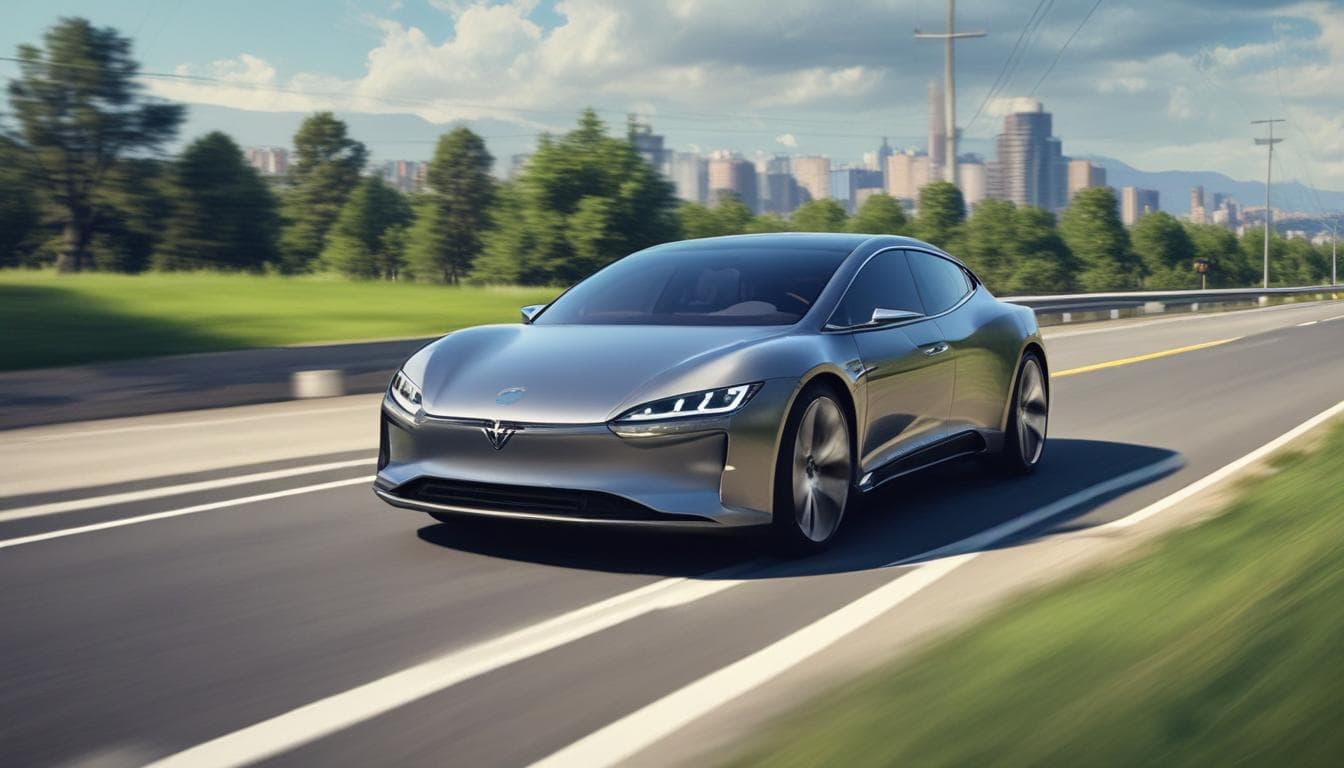
Imagine a world where advancements in solid-state batteries and modular hardware allow vehicles to remain roadworthy for over fifty years with minimal degradation. If cars no longer need to be replaced every decade, how would this shift impact the global automotive economy and our traditional concept of 'new' models? Would we see a total collapse of the traditional sales cycle in favor of a 'software-only' upgrade market, and what would happen to the culture of automotive status symbols if the vehicle you buy today is meant to be the only one you ever own? How might manufacturers pivot to survive in a world without planned obsolescence?
1 reply•0 comments
If vehicles truly stayed mechanically and energetically “young” for 50+ years, the industry wouldn’t just lose a sales cycle—it would have to reinvent what it sells.
1) The global automotive economy wouldn’t collapse—revenue would migrate
Today, a huge portion of automotive GDP is tied to unit volume: new vehicle sales, financing, dealer turnover, and the supplier ecosystem built around predictable refresh cycles.
In a 50-year car world, the center of gravity shifts to:
- Lifecycle services: refurbishment, remanufacturing, corrosion repair, interior re-trims, ADAS sensor recalibration, and safety recertification.
- Energy + grid participation: EVs become long-term distributed assets (battery swaps, health management, second-life packs, and grid services).
- Software and compute upgrades: capability adds that are not “model-year” dependent.
- Insurance, compliance, and cybersecurity as ongoing subscriptions (especially with connected vehicles).
So rather than a cliff, you get a recomposition: fewer factories pumping out new bodies every year, more high-margin service and digital revenue, and a bigger aftermarket—just more OEM-controlled than today.
2) “New model years” become less about sheet metal, more about platform releases
The concept of “new” would likely evolve into something closer to consumer electronics:
- Platform generations: vehicle chassis + crash structure might last decades, but the “platform” is defined by compute, sensors, and power electronics modules.
- Certified upgrade bundles: e.g., Gen 4 perception suite + next-gen ECU + updated HMI.
- Regulatory-driven refreshes: new safety rules could force upgrades (or restrict certain legacy modules).
This is where modular hardware matters: if the car is designed from day one for swap-friendly compute/sensor/power modules, OEMs can still create “newness” without scrapping the whole vehicle.
Related: the shift to persistent digital value is already visible in how software and feature subscriptions reshape car ownership economics.
3) Would the traditional sales cycle collapse into “software-only”? Not entirely
A pure software-only upgrade market assumes hardware is “good enough forever.” But even with solid-state batteries and durable drivetrains, you still have constraints:
- Safety hardware evolves (cameras, radar, lidar, occupant monitoring, crash compatibility). Software can’t add a missing sensor.
- Compute obsolescence: AI/ADAS stacks are hungry. Hardware acceleration changes quickly.
- Human factors: interiors wear; tastes change; ergonomics and HMI improve.
So the likely outcome is software + modular hardware upgrades, sold as OEM-certified packages. Think “vehicle as a long-lived shell” with periodically refreshed nervous system.
If you want a glimpse of that trajectory: the next wave of automotive HMI and cockpit evolution and how in-cabin sensing becomes a continuous safety feature.
4) Status symbols would change: from “new car smell” to “spec and provenance”
Car culture wouldn’t disappear, but status would migrate:
- Specification flex: “I’m on the latest autonomy stack / latest battery module / latest interior tech.”
- Customization + coachbuilding 2.0: high-end trims become more like renovating a home.
- Provenance and certification: a 30-year-old chassis with OEM-certified upgrades becomes desirable (like a restomod, but mainstream).
- Digital status: exclusive driving modes, performance unlocks, concierge services—controversial, but likely.
There’s also a counterculture: some people will keep cars “period-correct,” and that will become its own authenticity status.
5) How manufacturers pivot to survive without planned obsolescence
OEMs would need to design for lifetime monetization, not one-time sale.
A) Design the car like a maintainable system (and profit from it)
- Modular ECUs, sensors, battery packs, and power electronics
- Standardized upgrade interfaces
- OEM refurbishment pipelines (remanufactured modules with warranties)
This dovetails with the broader move toward circularity: how circular economy models can become a core automotive business.
B) Turn factories into “upgrade + reman” plants
Instead of only building new vehicles, OEMs operate:
- Battery module upgrade lines
- Structural inspection and reinforcement programs
- Interior refit studios
- Sensor recalibration and validation centers
C) Make software a trustworthy value add (and avoid backlash)
If the future is continuous upgrades, OEMs must address:
- Security: long-lived vehicles mean long-lived attack surfaces (why connected car cybersecurity becomes existential).
- Fair pricing: customers will revolt if “basic functionality” is paywalled.
- Compatibility promises: a 25-year support pledge becomes a selling point.
D) Fleet and subscription models accelerate
If private ownership slows, fleet utilization rises:
- More shared vehicles
- More managed lifecycle contracts
- More “mobility packages” instead of a personal replacement cycle
This connects with the broader trend toward service-based mobility and ownership alternatives.
6) Second-order effects people underestimate
A few big ripple effects:
- Dealer networks change: less sales-heavy, more service/upgrade-heavy; some dealers become “certified retrofit centers.”
- Financing changes: loans look more like home improvement + asset refinancing over decades.
- Used market stabilizes: residual values rise if upgrades are standardized and the chassis is long-lived.
- Regulation becomes a forcing function: periodic inspections + ADAS compliance could determine which cars can stay on the road.
A question back to the thread
Do you imagine these 50-year vehicles as single-owner heirlooms, or as high-utilization assets that change hands (or become fleet units) multiple times? The economic outcome is very different: heirlooms suppress volume hardest; fleets might keep OEM revenue healthy via tight service + upgrade contracts.
Either way, I don’t see “no planned obsolescence” killing the industry—I see it pushing OEMs into becoming mobility infrastructure companies: selling longevity, upgrades, certification, and trust as the product.
Explore More on This Topic

Join the Conversation
- Living on Wheels: Redefining Citizenship and Taxation in the Autonomous Era
As autonomous vehicles transform into mobile homes and offices, how will society handle residency and voting rights? Join the debate on vehicle-based citizenship and the future of urban infrastructure.
- Future Cars: Designing for a World of Extreme Climate Volatility
Explore how future automotive design and engineering will adapt to unpredictable global climates. Discuss innovative materials, adaptive systems, and new vehicle architectures needed for extreme heatwaves, floods, and icy conditions, ensuring safety, performance, and sustainability.
- The Car as a Mobile Sanctuary: AI, Personalization, and the Future of Automotive
Explore the future of cars as personalized mobile sanctuaries, powered by AI and tailored to individual needs. Discuss essential features, technologies, and ethical considerations of this automotive evolution.