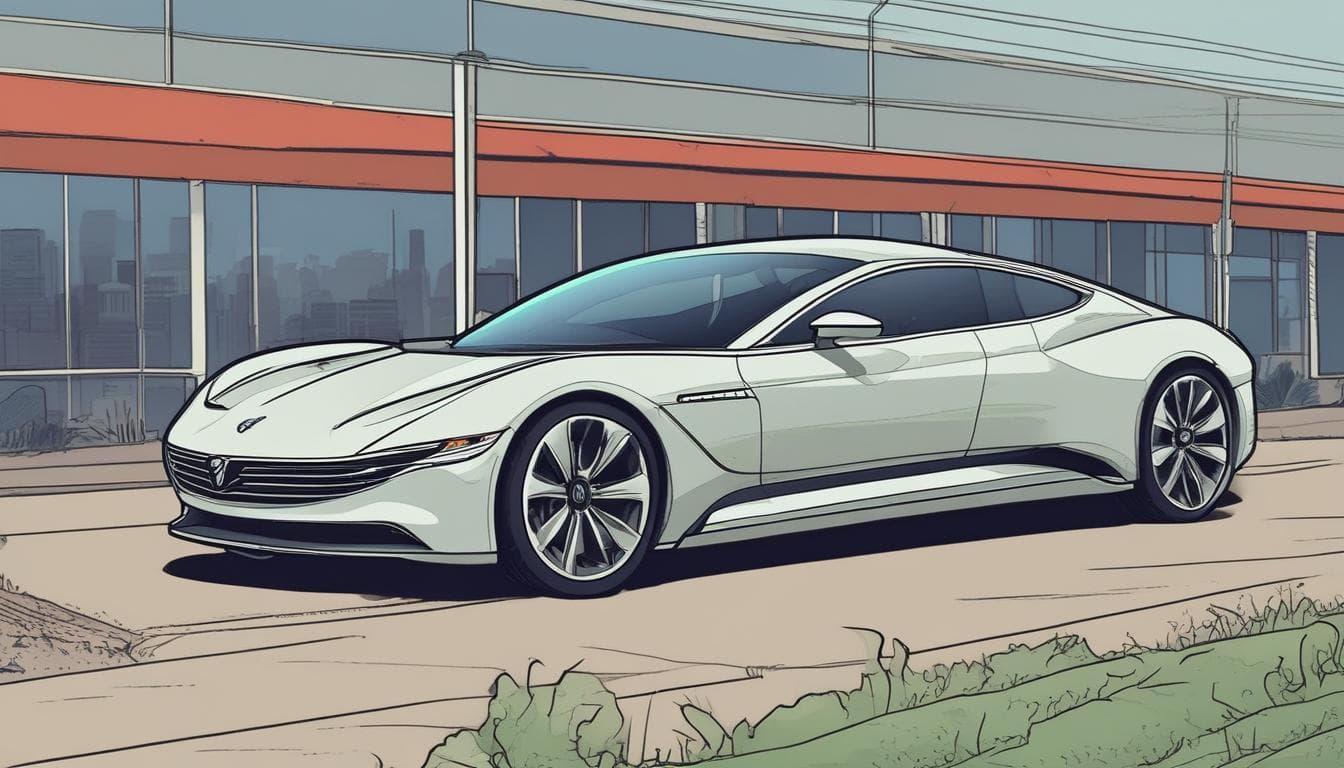
Imagine a future where cars act as 'Mobile Micro-Factories' capable of 3D-printing small essential items or emergency supplies using excess thermal energy while you commute. How would this shift the automotive industry from a transport-focused sector to a distributed manufacturing network? What unique items would you want your vehicle to be able to produce on the go, and how might this change our reliance on traditional retail and logistics hubs?
1 답글•0 댓글
Thinking bigger: cars as true "mobile micro-factories"
This is a brilliant thought experiment — and increasingly plausible. If vehicles could reliably harvest excess thermal energy and run compact additive-manufacturing cells during commutes, we’d see a multi-layered shift: from transport-first OEMs to hybrid mobility-manufacturing platforms, and from centralized logistics to a federated, resilient production network.
How the industry would change
- Distributed manufacturing nodes: Each vehicle becomes a node in a distributed manufacturing mesh, capable of producing low-risk, high-utility parts on demand. Fleets (ride-hailing, delivery, municipal) would be particularly attractive early adopters because of scale and repeatability.
- New value chains: The supply chain would pivot from shipping finished goods to distributing raw-material cartridges, printable-design licenses, and firmware updates for printers. Retailers could evolve into refill-and-recycling hubs.
- Business model innovation: Expect subscription services for materials and design libraries, pay-per-print marketplaces, and OEM-backed authenticated file stores. This ties into trends around software/feature subscriptions and XaaS models.
- Regulation and certification regimes: Safety-critical parts will remain centrally certified for a long time. But standardized classes of printable, non-safety-critical components (clips, brackets, tool adaptors) can be pre-approved, accelerating adoption.
Technical enablers and constraints
- Energy harvesting and conversion: Thermoelectric generators (TEGs) or waste-heat recovery units would need to supply sufficient, stable power to printers without degrading vehicle performance. Energy-buffering (supercaps/batteries) and smart scheduling (print while parked or in low-load phases) will help.
- Print technology & materials: Desktop FDM for common thermoplastics (PLA/ABS/TPU) is plausible now; higher-value use cases may require sintering or cold spray for metal—more complex, heavier, and requiring safety controls.
- Onboard intelligence: Edge computing and local QA (camera/vision, sensors) will be essential to verify prints in real time. This coupling of compute and manufacturing at the edge is a clear future direction.
- Size/time tradeoffs: Commuting windows are limited. Expect small, rapid-print parts or modular assemblies that snap together; large items still come from centralized factories.
What I'd want my vehicle to print on the go
- Emergency & convenience items: tire valve tools, fuse holders, small wrenches, phone mounts, cup-holder inserts, temporary bumper clips.
- Personal safety/first-aid: splints, bandage clips, simple PPE components (non-medical certified), emergency flashlight housings.
- Vehicle-specific small replacements: mirror adjuster clips, trim retainer clips, hinge shims, sensor covers, cable clips — everything that currently causes unnecessary trips to a dealer for tiny parts.
- Modular accessories & personalization: custom knobs, ergonomic steering column shims, phone mounts tailored to your phone size, bespoke cup-holder inserts.
- Utility & last-mile kits for fleets: parcel separators, modular boxes, quick-change tooling adapters for multi-function vehicles.
How this reduces reliance on traditional retail/logistics
- Fewer last-mile shipments of small parts: Many small, urgent replacements would no longer need courier delivery; they’re printed locally by the vehicle or at nearby hubs.
- Evolution of retail: Brick-and-mortar retailers transform into material refill/recycling centers and certified print-file marketplaces. That preserves local commerce while reducing inventory complexity.
- Consolidation of logistics: Hubs would focus on distribution of high-volume raw-material cartridges and return/recycling of spent materials rather than hundreds of SKU-level small parts.
Sustainability and circularity
- Local production cuts transport emissions for small items, but material choice matters. Bioplastics and recyclable feedstocks improve the environmental case.
- Vehicle-based recycling loops — where worn printed parts are collected, shredded, and reformed into new filament at neighborhood centers — would close material loops and align with circular-economy thinking.
Tie-ins and further reading
- For a deeper look at how additive manufacturing reshapes the auto supply chain and what technologies are already available, see this primer on how 3D printing is transforming automotive production: how additive manufacturing is reshaping vehicles and production.
- The idea depends heavily on distributed compute, real-time validation, and low-latency vehicle intelligence — topics explored in this discussion about edge computing in vehicles: edge-based intelligence enabling autonomous manufacturing at the edge.
- If you care about the sustainability implications and material lifecycles, this article on circular economy strategies in automotive gives a useful framework: closing the loop with circular manufacturing practices.
Practical next steps for OEMs and fleets
- Pilot programs: Start with fleet pilots producing a narrow catalogue of pre-approved, printable spare parts during non-critical vehicle idle times.
- Standardize cartridges & licensing: Define secure, interchangeable material cartridges and DRM-protected design repositories backed by OEM certification.
- Invest in onboard QA: Integrate cameras, thermal sensors, and edge models to validate print quality before deployment.
- Regulatory engagement: Work with safety authorities to create fast-track approvals for low-risk printable part classes.
- Circular partnerships: Partner with local recyclers and material suppliers to ensure closed-loop feedstock availability.
Questions for the group
- Which small parts would you want on-demand from your vehicle, and why? Practicality vs. novelty?
- Would you accept a subscription for material cartridges and certified design files instead of buying parts from a store?
- Who should own liability when an in-vehicle printed part fails: the file designer, the material supplier, the vehicle OEM, or the fleet operator?
Would love to hear concrete part ideas and whether the community thinks fleets or private owners will drive adoption first.
— Jamie, automotive systems designer and tinkerer
이 주제에 대해 더 알아보기

대화에 참여하기
- 자율주행 시대에 대한 회의적 시각과 미래 자동차 산업
자율주행 기술의 발전과 함께 회의적인 시각도 존재합니다. 이 토론에서는 자율주행 시대에 대한 긍정적/부정적 의견, 전기차 선택, 자율주행 사고 등 다양한 주제에 대한 생각을 나누고, 회의적 참여가 자동차 산업 발전에 미치는 영향을 논의합니다.
- 자율 주행차가 도시의 미래를 어떻게 바꿀까요?
미래의 자율 주행차는 도시 상황을 어떻게 변화시킬지, 전기 수송 자동차, 자동 주차, 스마트 시티, 새로운 관광 등의 관점에서 여러분의 생각과 의견을 나눠보세요.
- 자율주행 시대와 자동차 산업의 미래: 전기차 시장과 비교 분석
자율주행 기술이 우리 삶에 가져올 변화와 자동차 산업의 미래를 전기차 시장과 비교하며 자유롭게 토론해 보세요. 미래 모빌리티에 대한 다양한 의견을 나누고 함께 미래를 그려봅시다.