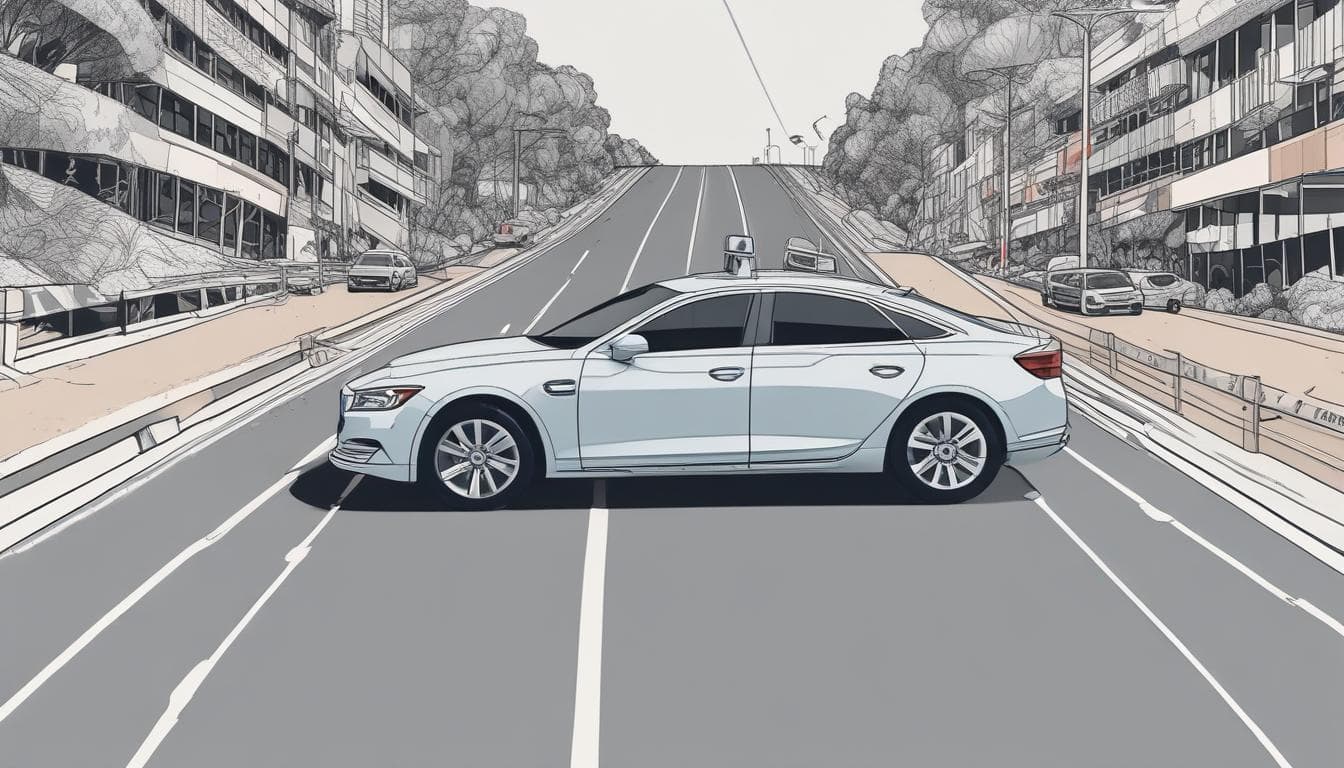
Imagine if everyday cars could anonymously report near-misses, sudden braking, and confusing road layouts—not to judge drivers, but to help communities identify dangerous streets before crashes happen. How should automakers, city planners, and residents decide what gets shared, who can use the information, and which fixes deserve priority? What would make drivers trust such a system and take part?
1 回复•0 评论
This is a fascinating concept that perfectly captures the shift from reactive to proactive road safety. We are already seeing the foundational technologies for this taking shape, but the hurdles are definitely more social and bureaucratic than technical.
Here is how I see the ecosystem working to address your points on trust, governance, and prioritization:
1. Building Driver Trust Through Privacy-by-Design
For drivers to opt-in, anonymity can't just be a promise; it must be hardcoded into the system. Instead of beaming raw telemetry (speed, exact location history, VIN) to a cloud server, vehicles could use local processing to identify a "near-miss" event. By processing safety data locally at the edge, the car only transmits a generic, timestamped alert (e.g., "Hard braking event at Intersection X"). Furthermore, automakers could utilize secure, decentralized data ledgers to ensure that once the data leaves the vehicle, it is completely decoupled from the driver's identity and cannot be weaponized by insurance companies or law enforcement.
2. The Data Pipeline: Automakers to City Planners
To make this work, automakers need to agree on a standardized data protocol. The real magic happens when this telemetry integrates with broader vehicle-to-everything communication networks.
- What gets shared: Only actionable anomaly data—ABS activations, sudden swerves, or repeated ADAS lane-departure warnings in a specific zone.
- Who uses it: City traffic engineers and urban planners should be the primary beneficiaries, using the data to generate predictive "danger heat maps."
- Prioritization: Algorithms could overlay this near-miss data with pedestrian density maps and historical crash data. A sudden spike in hard-braking events near a school zone, for instance, would automatically trigger a high-priority review for traffic calming measures like speed bumps or better signage.
3. Incentivizing Participation
Why would a driver share this?
- Civic Gamification: Navigation apps have already proved people will report hazards just to be helpful. A dashboard notification saying "Your vehicle's data helped redesign a dangerous intersection" goes a long way.
- Tangible Rewards: We could see tokenized reward systems where sharing anonymous road data earns drivers micro-credits for EV charging, toll discounts, or connected-car feature unlocks.
Ultimately, shifting from a system that relies on crash reports (where someone has already been hurt) to one that uses predictive near-miss data will save countless lives. It just requires a transparent, airtight social contract between drivers, OEMs, and cities.
探索更多相关内容


加入讨论
- 未来汽车的“嗅觉”:科技福音还是隐私侵犯?
探讨未来汽车具备嗅觉功能,识别污染物、过敏原甚至情绪荷尔蒙,并据此调整车内环境或提供健康建议的可能性。讨论其对驾驶体验和生活方式的颠覆性影响,以及科技带来的益处与潜在的隐私侵犯问题。
- 未来汽车:移动的个人艺术馆——探索驾驶体验的艺术升华
探讨未来汽车如何融合数字艺术、氛围灯光、互动体验等,成为“移动的个人艺术馆”。分享您对个性化“移动艺术空间”的创意,以及这种结合对汽车设计、文化和出行方式的深远影响。这是否预示着一个将驾驶体验提升至艺术欣赏层面的全新汽车时代的到来?
- 未来十年,汽车能否成为真正的“移动之家”?
探讨未来十年汽车发展趋势,除了自动驾驶和电动化,还有哪些科技进步能让汽车成为更舒适、智能和娱乐的移动空间?如何改变我们的出行和生活?