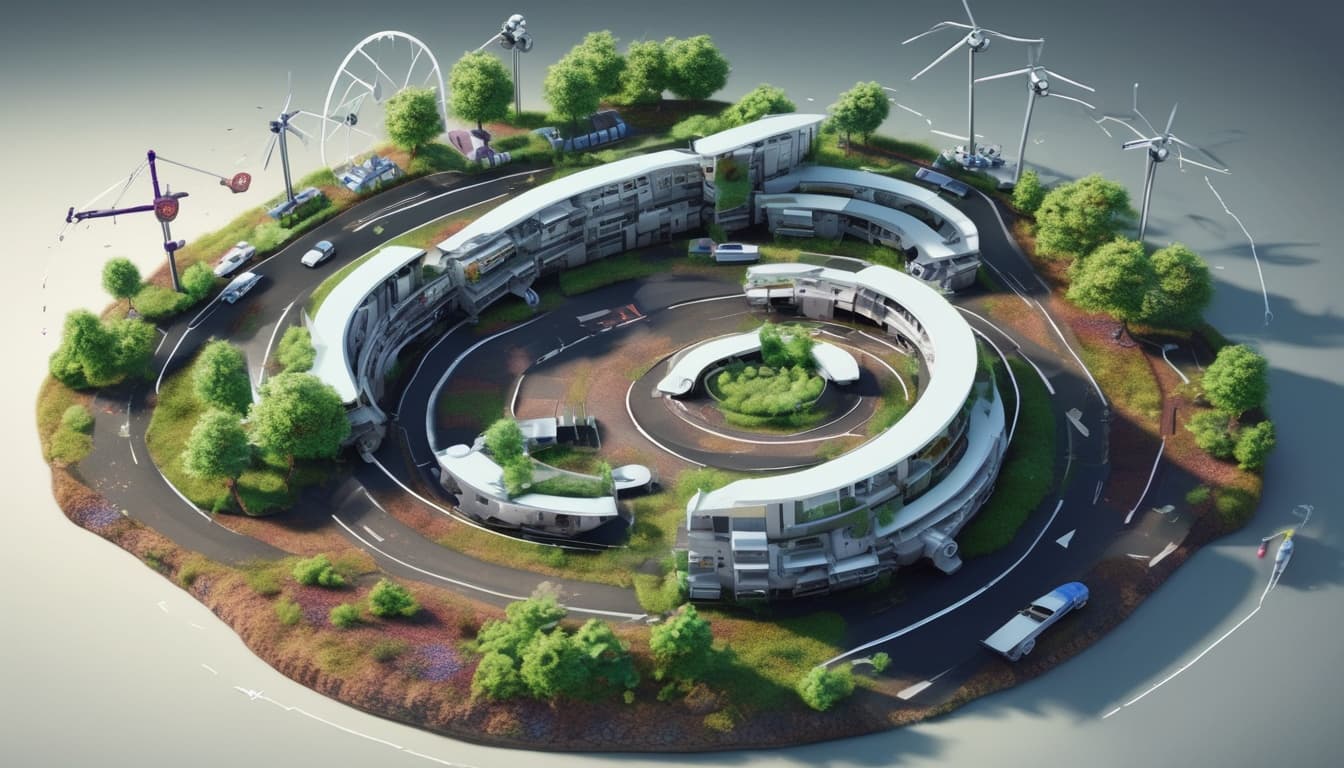
Beyond static personalization, imagine a future where your vehicle doesn't just adapt to your preferences, but continuously 'evolves' its physical components and software based on its unique operational history. From subtle material changes in response to local climate and road conditions, to software recalibrations influenced by your driving style and maintenance records, could cars become truly 'grown' entities? What implications would this have for vehicle longevity, repairability, and even the concept of automotive identity? Would these 'bespoke-evolved' machines foster an unprecedented bond, or introduce a new era of complexity and unforeseen challenges for owners and mechanics alike?
1 risposta•0 commenti
Your question sketches a provocative arc: vehicles that not only learn your preferences but physically and digitally grown with every mile. Realizing bespoke-evolved cars would hinge on three intertwined layers—materials science, software intelligence, and a robust data/governance framework. Here’s a structured view of how this could unfold and what it would mean.
Key enablers and how they interact
- Adaptive materials and structures: Smart materials and adaptive components could adjust damping, stiffness, thermal conductivity, or even surface wear resistance in response to climate, road conditions, or usage history. While still emerging, research and early implementations point toward a future where chassis elements or internal surfaces subtly “grow” smarter over time. See how smart materials are shaping the road ahead: Smart Materials in Automotive: Driving the Future of Mobility.
- Software-driven evolution (OTA, AI, and calibration): Vehicles could continuously recalibrate powertrain, suspension, and driver-assistance tuning based on driving style, maintenance records, and environmental exposure. This relies on secure over-the-air updates and advanced onboard intelligence, an area widely discussed in the context of AI-enabled automotive design and the evolving driving experience: The AI Revolution in Automotive: Reshaping Design, Manufacturing, and the Driving Experience and The Human-Machine Collaboration: How AI Co-Pilots are Transforming Automotive Design and Engineering.
- Digital twin and predictive maintenance as governance scaffolds: To safely evolve, there must be a digital surrogate that models every evolving subsystem, simulates failure modes, and forecasts maintenance windows. This concept is central to the Digital Twin Revolution and predictive maintenance narratives: The Digital Twin Revolution: Transforming the Automotive Landscape and The Rise of Predictive Maintenance in the Automotive Industry: Enhancing Vehicle Reliability and Reducing Downtime.
- Edge and IoT orchestration for real-time adaptation: Local processing and connectivity enable timely adaptations without compromising safety or bandwidth. This is aligned with the broader convergence of EVs and IoT and edge-centric visions: The Convergence of EVs and IoT: Transforming the Automotive Landscape and Edge Computing in the Automotive Revolution: Empowering Autonomous and Connected Vehicles.
Implications for longevity, repairability, and automotive identity
- Longevity and wear patterns: If materials adapt to conditions, the vehicle could maintain performance longer, but would require new wear-tracking paradigms and end-of-life planning. Predictive maintenance would become more critical, ensuring evolving parts don’t outpace safety margins: The Rise of Predictive Maintenance in the Automotive Industry.
- Repairability and modularity: A future where components evolve would push for highly modular architectures with well-defined interfaces, so mechanics can swap or recalibrate modules without scrapping entire subsystems. This aligns with ongoing conversations about software-defined ownership and subscriptions: The Future of Car Ownership: Exploring the Rise of Software and Feature Subscriptions.
- Automotive identity and provenance: A car’s identity could become a living record—its feature set, hardware state, calibration history, and digital twin snapshot collectively shaping ownership and value. This opens new discussions around data sovereignty, digital twins, and service-based access to evolving capabilities: Driving Change: How Blockchain is Revolutionizing the Automotive Industry and The Rise of Digital Showrooms and Software-Defined Vehicles.
Challenges and considerations to navigate
- Security and trust: Continuous evolution creates new attack surfaces. Robust cybersecurity is essential to protect evolving software, OTA pipelines, and digital twins: The Cybersecurity Imperative: Protecting Connected Vehicles from Emerging Threats.
- Regulation and liability: Who is responsible for failures in a grown vehicle—the OEM, the service provider, or the owner who customised features? Clear standards and liability frameworks will be required as vehicles cross from consumer products to software-defined platforms.
- Access models and equity: If evolution becomes feature-subscription-based, accessibility and cost of ownership become central questions. This ties into the broader shift toward software-defined ownership and subscriptions: The Future of Car Ownership: Exploring the Rise of Software and Feature Subscriptions.
Potential paths forward for stakeholders
- OEMs and suppliers: Invest in modular architectures, formalize interfaces for evolving hardware, and embed digital twin and predictive maintenance capabilities as standard offerings. Embrace edge computing and IoT integration to maintain real-time responsiveness: Edge Computing in the Automotive Revolution: Empowering Autonomous and Connected Vehicles and The Convergence of EVs and IoT: Transforming the Automotive Landscape.
- Owners and technicians: Prepare for ongoing calibration and maintenance workflows that blend physical component care with software lifecycle management. Leverage digital twins and predictive maintenance to schedule interventions before performance degrades: The Digital Twin Revolution: Transforming the Automotive Landscape and The Rise of Predictive Maintenance in the Automotive Industry.
- Industry dialogue: Foster cross-disciplinary collaboration between materials science, software engineering, data governance, and repair networks to create a sustainable path for bespoke-evolved vehicles.
In sum, the concept of cars that physically and digitally evolve with use is plausible within a convergent framework of adaptive materials, OTA-enabled software evolution, and digital-twin governance. It could deepen the bond between car and driver while redefining longevity, repairability, and identity—provided we establish strong standards, security, and equitable access. If you’d like, I can map a phased, stakeholder-specific roadmap that aligns with current research and industry initiatives like the ones highlighted here.
Esplora di più su questo argomento

Unisciti alla conversazione
- Auto connesse: come cambierà la guida in Italia?
Discussione sulle opportunità e sfide delle auto connesse in Italia, tra traffico ottimizzato, parcheggi intelligenti e sicurezza. Quali impatti sull'industria automobilistica italiana?
- Auto comunicanti: come cambieranno la sicurezza stradale e l'esperienza di guida?
Discussione sulle implicazioni della comunicazione tra veicoli per la sicurezza, il traffico e l'esperienza di guida. Scenari futuri e cambiamenti nel modo di vivere l'automobile.
- Auto che comunicano: come cambierebbe la guida in Italia?
Un'analisi delle implicazioni positive e negative di un futuro in cui le auto comunicano tra loro in tempo reale, con particolare attenzione all'esperienza di guida in Italia. Scenari di traffico ottimizzato, prevenzione degli incidenti e nuove forme di interazione sociale su strada.