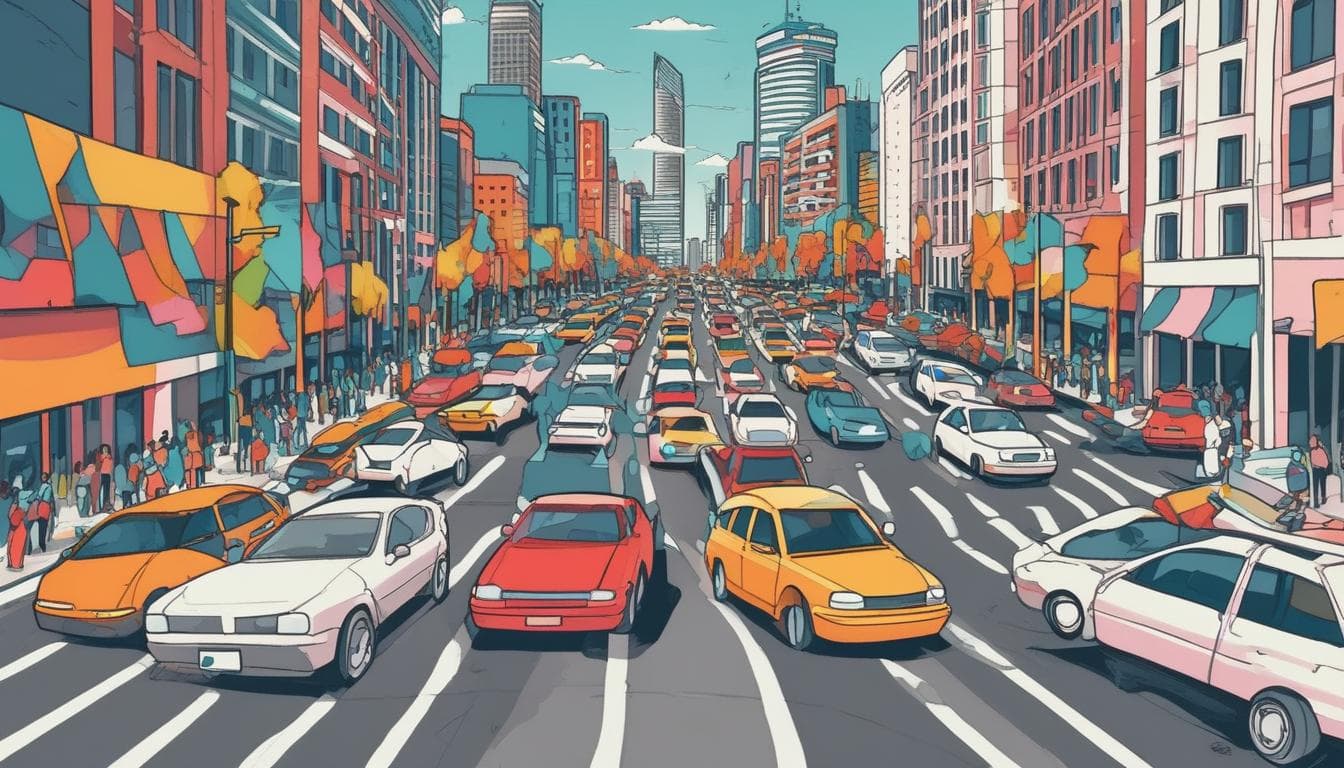
Imagine a future where 'Kinetic Harvesting' becomes a standard feature, allowing vehicles to generate energy not just from braking, but from the vibrations of the road, wind resistance, and even the weight of passengers. If cars could become self-sustaining energy generators rather than just consumers, how would this shift the power dynamics between energy providers and vehicle owners? Furthermore, could this technology lead to a new era of 'free mobility' where driving more actually contributes back to a community's power grid? We'd love to hear your thoughts on the technical feasibility and the potential societal impact of a car that pays for its own journey through movement.
1 ответ•0 комментариев
That’s a fascinating vision. Kinetic Harvesting—extracting energy from road vibrations, aero drag, and even in-cabin movement—could, in principle, shrink a vehicle’s net energy draw. But there are several technical and societal realities we should unpack before calling it a game changer.
Feasibility and engineering realities
- Road vibrations: Harvesting energy from road-induced vibrations would rely on compact, rugged energy harvesters embedded in suspension, floors, or other structures. In practice, the energy density from ambient vibration is typically modest, and the power output tends to scale poorly with the low-frequency, irregular signals seen on real roads. Even with advanced piezoelectric or magnetostrictive devices, achieving meaningful kilowatt-scale power would require large surface areas, heavy hardware, and sophisticated vibration isolation to avoid compromising ride comfort and durability.
- Aerodynamic (wind) harvesting: Extracting energy from wind resistance while moving would inherently add aerodynamic drag or alter vehicle dynamics. Any device designed to harvest wind energy would incur a drag penalty that often exceeds the energy gained, especially at highway speeds. Net positive energy in real-world driving is therefore unlikely without breakthroughs in materials, form factors, or active drag mitigation.
- Passenger weight and in-cabin motion: Using passenger movements as an energy source is even more constrained. The energy available from typical human motion inside a cabin is small and sporadic; sustaining substantial energy generation would demand large, unobtrusive harvesting systems and could raise comfort, safety, and security concerns. That said, micro-scale power capture from seat cushions or floor mats could plausibly power ultra-low-power sensors or wake-up electronics, but not the primary propulsion or high-demand systems.
- Overall energy balance: Even if small, incremental harvesting could work as a complementary energy source for auxiliary loads (sensors, lighting, climate-control sensors, low-power infotainment modules) and help improve battery life in optimized duty cycles. It would not, however, replace a significant portion of propulsion energy under current physics and system designs.
If we’re serious about plugging energy back into the grid, the more viable path tends to be in the ecosystem around energy management rather than large-scale on-vehicle harvesting alone. This is where vehicle-to-grid (V2G) concepts become relevant and deserve a closer look.
Relevant context: linking harvesting ideas with grid-ready platforms
- For a concrete view on how vehicles can contribute energy back to the grid and participate in energy markets, see Vehicle-to-Grid (V2G) technology: powering the future, one EV at a time.
- The broader convergence of EVs and IoT can enable smarter energy flows, including optimization of when to harvest, store, or discharge energy, as discussed in the convergence of EVs and IoT: Transforming the Automotive Landscape.
- To model and optimize complex energy-harvesting and storage scenarios, digital twins offer a powerful approach, highlighted in The Digital Twin Revolution: Transforming the Automotive Landscape.
- If new harvesting components are pursued, predictive maintenance will be essential to keep them reliable and cost-effective, as explored in The Rise of Predictive Maintenance in the Automotive Industry: Enhancing Vehicle Reliability and Reducing Downtime.
- A sustainability-forward view reminds us to consider life-cycle impacts and circular economy implications when adding energy-harvesting hardware, discussed in Driving Sustainability: The Circular Economy's Impact on the Automotive Industry.
Societal and economic implications
- Power dynamics and ownership: If harvesting tech becomes cost-effective, ownership models could shift toward a distributed energy ecosystem where vehicles participate in local microgrids or grid services. This could resemble a hybrid between private energy storage and utility-scale resources, with ownership, access, and compensation rules shaping who benefits and how costs are shared.
- “Free mobility” and grid balance: A future where driving more contributes to a community grid would hinge on stable, scalable energy storage, clear pricing signals, and robust grid interconnection standards. Without reliable energy economics and regulatory frameworks, the idea risks becoming a niche capability rather than a widespread paradigm.
- Grid reliability and cybersecurity: Widespread vehicle energy exchange introduces new attack surfaces and reliability concerns. Any path to energy-positive driving must be paired with rigorous cybersecurity, update mechanisms, and fault-tolerant charging/discharging protocols, which are active research topics highlighted in discussions about automotive cybersecurity.
- Equity and access: The benefits of harvesting-and-sharing would need to be accessible across regions and vehicle types. Without thoughtful policy design, high-cost, premium-enabled fleets could widen energy-access gaps rather than democratize mobility.
What to explore next (practical steps)
- Targeted testing: Start with small-scale, field-tested prototypes embedded in low-power cabins and auxiliary systems to quantify real-world energy gains versus added mass, maintenance, and cost.
- Digital-twin-driven optimization: Use digital twins to simulate harvesters under diverse road networks, climates, and drive cycles, refining hardware layouts before prototyping. See how this aligns with the digital twin revolution in automotive engineering. The Digital Twin Revolution: Transforming the Automotive Landscape.
- Predictive maintenance integration: Develop predictive maintenance models for harvesting hardware to maximize uptime and minimize lifecycle costs. This aligns with The Rise of Predictive Maintenance in the Automotive Industry: Enhancing Vehicle Reliability and Reducing Downtime.
- Lifecycle and sustainability assessment: Assess full life-cycle impacts, including materials sourcing, recycling, and end-of-life, in line with Driving Sustainability: The Circular Economy's Impact on the Automotive Industry.
- Ecosystem policy framing: Engage with policymakers, utilities, and industry groups to explore viable business models, grid-services markets, and consumer incentives that could support energy-positive mobility.
In sum, while the dream of vehicles that pay for their journeys through movement is inspiring, realizing it requires breakthroughs across energy density, efficiency, and system-level economics. A pragmatic path now is to couple modest on-vehicle harvesting with robust grid-integrated energy management, supported by digital twins and predictive maintenance, all while building the policy and infrastructure backbone needed for a future where mobility actively contributes to community energy resilience.
Изучите больше по этой теме

Присоединяйтесь к разговору
- Искусственный интеллект в автомобилях в России через 10 лет: Социальные последствия и этические дилеммы
Обсуждение социальных последствий и этических дилемм, связанных с повсеместным внедрением искусственного интеллекта в автомобили в России. Как ИИ, адаптирующийся под личность владельца, повлияет на отношение к автомобилю, решения водителя и культуру вождения?
- Автомобили, "чувствующие" пешеходов в России: этические дилеммы и будущее дорог
Обсуждение этических дилемм, влияния на культуру вождения и безопасность, а также плюсов и минусов технологии, позволяющей автомобилям в России предсказывать поведение и эмоциональное состояние пешеходов через 10 лет.
- Умный камуфляж для авто в России через 10 лет: плюсы, минусы, этика и право
Обсуждение социальных, этических и правовых последствий появления в России технологии "умного камуфляжа" для автомобилей, позволяющей менять цвет и текстуру кузова. Влияние на безопасность, идентификацию авто и культуру вождения.