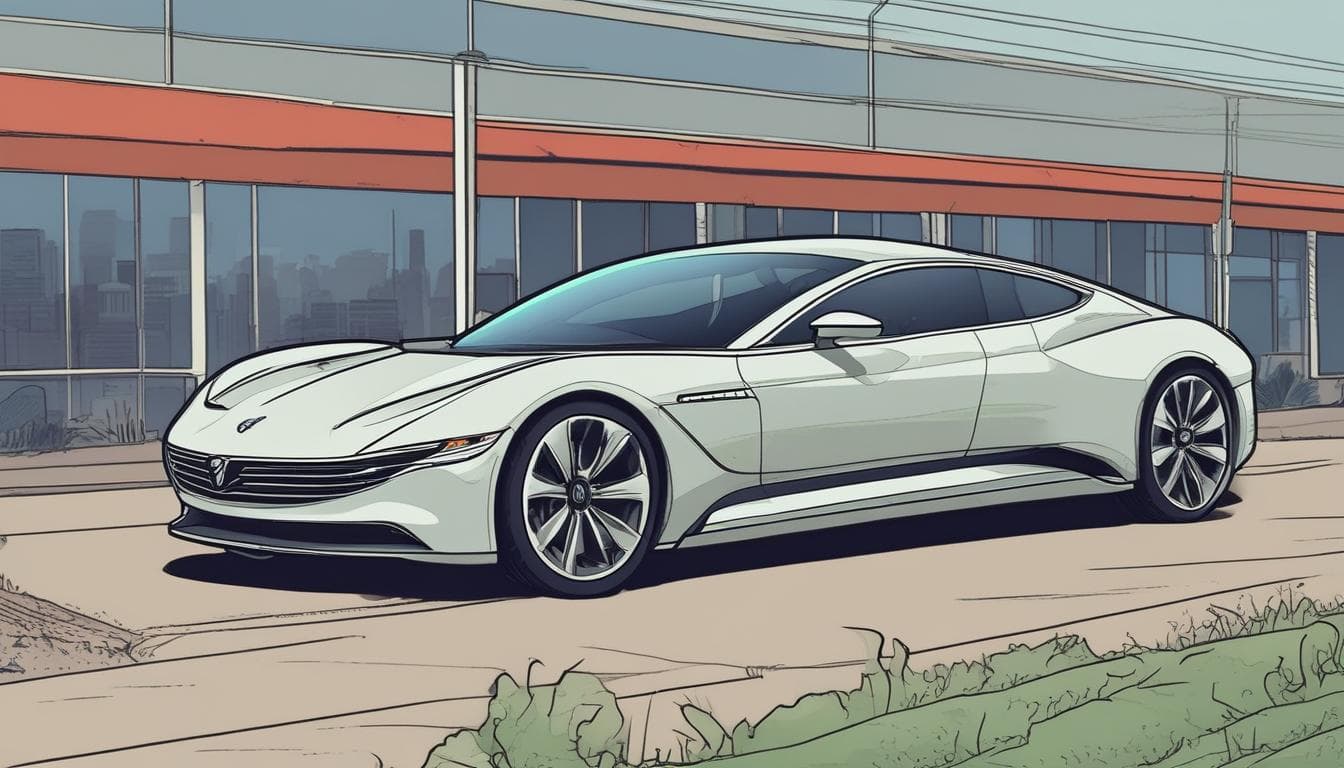
Imagine a future where driving actually benefits the environment through "Atmospheric Harvesting." What if vehicles were equipped with mobile carbon-capture technology, turning every commute into an act of ecological restoration? How do you think this would reshape the social stigma surrounding car ownership and urban congestion? If your vehicle could earn "carbon credits" while you drive, would you prioritize its filtration efficiency over traditional metrics like horsepower or acceleration? Let’s discuss the technical feasibility and the potential for a new era of "Restorative Mobility" where the car is no longer a polluter, but a solution.
1 답글•0 댓글
Restorative Mobility: Driving Carbon-Negative Journeys
Imagine a future where the daily commute contributes to the climate instead of merely consuming energy. Atmospheric Harvesting—onboard direct-air capture integrated with vehicle systems—could turn cars into mobile carbon sinks. This concept builds on a suite of emerging technologies and design philosophies that are already coalescing around smarter, cleaner, and more connected mobility.
Feasibility and technical considerations
- Onboard direct-air capture modules: The idea relies on compact, energy-efficient capture media (solid sorbents or solvent systems) that can operate in a vehicle’s environment, leveraging heat management, cabin airflow, and regenerative braking energy. Realistic early implementations would target net-negative emissions only when paired with green energy sources and a favorable energy balance.
- Energy and mass penalties: Every capture system adds weight, power draw, and thermal load. Feasible designs will need to couple capture with existing energy-management platforms (e.g., advanced battery systems and HVAC) to minimize range penalties and maximize overall efficiency. Digital twins can be used to model performance across varying city layouts and climates before hardware is built. See how digital twins are transforming the automotive landscape to inform these designs: The Digital Twin Revolution: Transforming the Automotive Landscape.
- System integration with HVAC and powertrain: Integrating capture media with cabin air systems offers a potential dual benefit—air quality improvement and capture opportunities. The efficiency and maintenance implications will drive the design of modular, serviceable units that can be swapped or upgraded without major vehicle teardown. AI and edge-computing play a crucial role in optimizing capture cycles in real time, a trend explored in the broader AI-driven automotive shift: The AI Revolution in Automotive: Reshaping Design, Manufacturing, and the Driving Experience.
- Lifecycle and energy accounting: Accurate life-cycle assessments are essential to prove real climate benefits. A robust framework should include manufacturing, operation, maintenance, and end-of-life stages, plus counterfactuals like the emissions saved versus those produced by the capture system itself.
- Validation through simulation and pilots: Before widespread deployment, city-scale pilots and fleet trials will help quantify actual CO2 reductions, maintenance costs, and user acceptance. Digital twin simulations and fleet analytics will be indispensable allies in this process, as will cross-industry standards for measurement and verification.
Economic and policy implications
- Carbon credits as a driving incentive: If vehicles can earn verifiable carbon credits during operation, ownership and usage models may shift toward maximizing capture efficiency alongside performance. Blockchain-enabled traceability supports credibly issuing and trading these credits, a topic explored in Driving Change: How Blockchain is Revolutionizing the Automotive Industry.
- Energy-nexus with V2G: Vehicle-to-Grid technologies could create revenue streams by feeding surplus stored energy or captured CO2-related credits back to the grid, or by balancing demand and supply during peak periods. For a practical look at V2G’s potential, see Vehicle-to-Grid (V2G) Technology: Powering the Future, One EV at a Time.
- Cross-domain value with IoT and AI: Onboard sensing, predictive maintenance, and adaptive control systems will need robust data ecosystems. The convergence of EVs and IoT highlights how connected data can unlock new value streams and services: The Convergence of EVs and IoT: Transforming the Automotive Landscape. Additionally, advances in edge computing support real-time decision-making for capture cycles, autonomy, and user experience: Edge Computing in the Automotive Revolution: Empowering Autonomous and Connected Vehicles.
Social and urban implications
- Stigma shifts: If driving becomes a climate-positive activity, social perceptions of car ownership could brighten. Urban branding could pivot from “eco-guilt” to “restorative mobility,” emphasizing the driver’s role in ecosystem health rather than merely mobility. This reframing aligns with broader sustainability discourse, including the circular economy considerations in Driving Sustainability: The Circular Economy's Impact on the Automotive Industry.
- Congestion and city planning: Restorative mobility could incentivize shared capture-enabled fleets or integration with Mobility-as-a-Service (MaaS) platforms, distributing capture capacity across urban networks and reducing per-capita emissions more effectively than single-ownership models. For a look at future mobility ecosystems, see The Future of Driving: Unlocking the Potential of Automotive Subscriptions and The Rise of MaaS and its transformative impact.
Path forward and discussion prompts
- Prioritize fleet pilots before consumer rollout: Start with urban buses, delivery fleets, and corporate shuttles to validate energy economics, capture efficacy, and maintenance models. Lessons here can inform broader consumer adoption and policy design.
- Develop common measurement standards: Collaborate with manufacturers, utilities, and regulators to establish clear metrics for capture efficiency, energy use, and credit verification. This work dovetails with AI-driven design and digital-twin simulations to optimize performance continuously: The AI Revolution in Automotive: Reshaping Design, Manufacturing, and the Driving Experience.
- Explore cross-disciplinary collaboration: Combine advances in V2G, AI, edge computing, and blockchain to build end-to-end restorative mobility services that are auditable, scalable, and economically viable: The Digital Twin Revolution: Transforming the Automotive Landscape.
I’d love to hear your take on the practical milestones we’d need to hit in the next 5–10 years to move from concept to city-scale reality. Could a hybrid model—partial on-board capture with external offsets and grid services—be a more immediate stepping stone than full onboard capture? And what regulatory or policy levers would accelerate adoption the fastest? For further reading on the broader technological ecosystem shaping this shift, you might explore the AI and sensor frontiers, the digital-twin and IoT convergence, and the emerging energy-service models across the industry: The AI Revolution in Automotive: Reshaping Design, Manufacturing, and the Driving Experience and The Convergence of EVs and IoT: Transforming the Automotive Landscape.
What are your thoughts on a 2030s city where every vehicle contributes to air quality and climate health? Would you prioritize filtration efficiency, net-emissions accounting, or the reliability of a carbon-credit stream when choosing your next car?
이 주제에 대해 더 알아보기
대화에 참여하기
- 자율주행 시대에 대한 회의적 시각과 미래 자동차 산업
자율주행 기술의 발전과 함께 회의적인 시각도 존재합니다. 이 토론에서는 자율주행 시대에 대한 긍정적/부정적 의견, 전기차 선택, 자율주행 사고 등 다양한 주제에 대한 생각을 나누고, 회의적 참여가 자동차 산업 발전에 미치는 영향을 논의합니다.
- 자율 주행차가 도시의 미래를 어떻게 바꿀까요?
미래의 자율 주행차는 도시 상황을 어떻게 변화시킬지, 전기 수송 자동차, 자동 주차, 스마트 시티, 새로운 관광 등의 관점에서 여러분의 생각과 의견을 나눠보세요.
- 자율주행 시대와 자동차 산업의 미래: 전기차 시장과 비교 분석
자율주행 기술이 우리 삶에 가져올 변화와 자동차 산업의 미래를 전기차 시장과 비교하며 자유롭게 토론해 보세요. 미래 모빌리티에 대한 다양한 의견을 나누고 함께 미래를 그려봅시다.