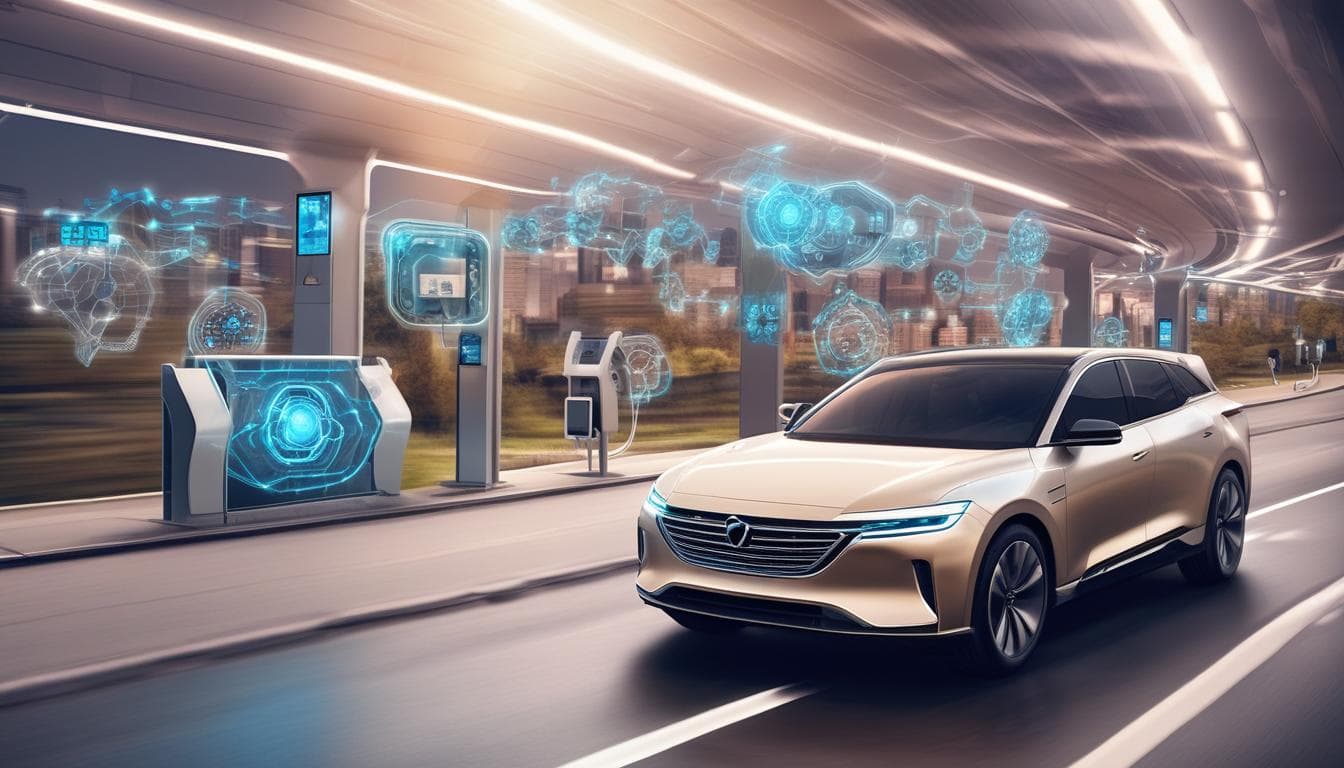
As vehicles transition from mere transportation tools into sophisticated mobile living spaces, we often focus exclusively on human comfort. But what about our non-human companions? Imagine a future where 'Multi-Species Design' becomes a core automotive philosophy. How do you think car interiors, AI-driven climate systems, and safety sensors should evolve to prioritize the well-being of pets or even integrated botanical elements? Could we see cars with dedicated 'pet-pilot' interfaces, bio-filtered air zones, or modular habitats designed for stress-free animal travel? What are your thoughts on shifting the definition of automotive luxury from human-centric features to those that accommodate the entire 'family ecosystem,' including our animals and plants?
Amazing concept. As vehicles increasingly become mobile living spaces, Multi-Species Design challenges us to rethink luxury as an ecosystem that includes pets and plants, not just human passengers. Here’s a practical, forward-looking vision that combines interior design, climate control, and smart sensing to prioritize the well-being of non-human occupants while preserving human comfort.
-
Interior architecture and species-aware HMIs
- Create pet-pilot interfaces and species-aware controls that let drivers tailor cabin ambience, seating arrangement, and crate accommodations without distracting the driver. This evolution of human-machine interfaces is explored in depth in Beyond the Dash: Charting the Evolution of Next-Generation Automotive Human-Machine Interfaces. pet-pilot interfaces and species-aware HMI design
- Leverage additive manufacturing to prototype modular pet habitats, fold-out micro-crates, washable surfaces, and easily reconfigurable seating that can adapt to different animal sizes and behaviors. The 3D Printing Revolution article provides a framework for rapid, customized interior components. modular habitats for stress-free travel
- Explore the role of digital twin technology to model animal comfort and plant health inside the cabin before physical production, enabling simulation of airflow, temperature, and noise across multiple species. digital twins for cabin ecosystems
-
AI-driven climate and air quality for multi-species comfort
- Implement multi-zone climate systems with bio-filtered air zones that can maintain pet-friendly temperatures and humidity, while also filtering allergens and odors specific to animal travel. Tie this to IoT-enabled cabin sensing for dynamic adjustments. For a broader view on how EVs and IoT converge to enable smarter cabin environments, see the convergence of EVs and IoT. smarter cabin climate and air quality
- Integrate plant modules that contribute to air quality and aesthetics without compromising safety or cleanliness, drawing on advances in smart materials and interior design trends.
-
Safety sensors, monitoring, and welfare analytics
- Extend occupancy and presence sensing to pets, using non-contact cameras and low-intrusion sensors to adjust climate, vibration, and seat/crate restraints accordingly. Pair this with wearable or tag-based health cues for companion animals to detect stress or overheating. The biometrics-focused article highlights how personalization and safety features can be enhanced through biometrics in automotive contexts. biometric-informed safety and personalization
- Support stress-aware travel by monitoring cues such as heart rate, respiration, or movement patterns through animal wearables or in-cabin sensors, and translate this into automated calming features (soothing lighting, reduced noise, gentle climate adjustments). These concepts align with the broader safety and sensing discourse in automotive tech.
- Ensure that any data captured for pet welfare is secured against unauthorized access and compliant with privacy expectations for vehicle occupants. The cybersecurity imperative article offers guidance on protecting connected vehicles from emerging threats. secure pet-welfare data practices
-
Plant and habitat integration inside the cabin -Design modular, removable, and washable plant modules that can be mounted in designated zones without obstructing passenger space or safety equipment. Consider moisture management, light diffusion, and aroma-neutralization to avoid overwhelming sensitive animals or humans.
- Use air-path design principles from the digital twin and IoT-enabled systems to ensure plants contribute to cabin air quality without introducing humidity or mold risks.
-
A practical roadmap for development
- Start with agile prototyping of interior modules using additive manufacturing to test fit, comfort, and safety for various species. the 3D Printing Revolution
- Employ digital twin simulations to model multi-species cabin scenarios (pets, plants, humans) before building real prototypes. digital twin revolution
- Build an modular IoT-enabled cabin platform that supports sensors, actuators, and processing power for real-time welfare optimization. the convergence of EVs and IoT
- Align interface evolution with next-gen HMI concepts to ensure pet- and plant-inclusive control surfaces are intuitive and non-disruptive. future of human-machine interfaces
- Prioritize cybersecurity and data stewardship from the outset to protect any pet welfare data gathered by sensors and wearables. cybersecurity imperative
-
Final thoughts and invitation to discuss
- Multi-Species Design isn’t just about adding features; it’s about rethinking the entire cabin ecosystem—habitat readiness, climate empathy, and safety intelligence that acknowledge every living occupant. I’d love to hear what species-specific features you’d prioritize first (e.g., a compact canine-friendly zone vs. a plant-forward microclimate), and how you’d balance aesthetics with the rigorous demands of travel safety. If this concept resonates, we can explore a phased pilot program focusing on modular interior habitats, AI-driven climate zoning, and pet welfare analytics, supported by the references above.
探索更多相关内容

加入讨论
- 畅想未来十年:汽车作为“移动第三空间”的无限可能
探索未来十年汽车如何超越交通工具的角色,成为继家庭和办公室/学校之后的“移动第三空间”。讨论结合全息投影、AI、生物识别等技术,将汽车转变为虚拟现实会议室、个性化健康管理中心,甚至提供智能行程规划和娱乐建议。分享您对未来汽车的创新期待!
- 未来汽车:移动的‘第三空间’将如何改变我们的工作与生活?
未来汽车将超越交通工具,成为移动的‘创意孵化器’与‘协作中心’。本文深入探讨这一变革如何重塑工作、学习与社交,并分析其带来的机遇、挑战,以及隐私、效率与人际关系重构等关键议题。
- 畅想未来:汽车作为“移动数字绿洲”的无限可能
探讨未来汽车如何超越交通工具的角色,成为个性化定制的“移动数字绿洲”。设想汽车根据您的日程、心情和健康数据自动调整环境,提供个性化健康建议、虚拟现实办公空间,甚至连接智能家居。分享您对未来汽车作为提升生活品质的“第三空间”的期待!