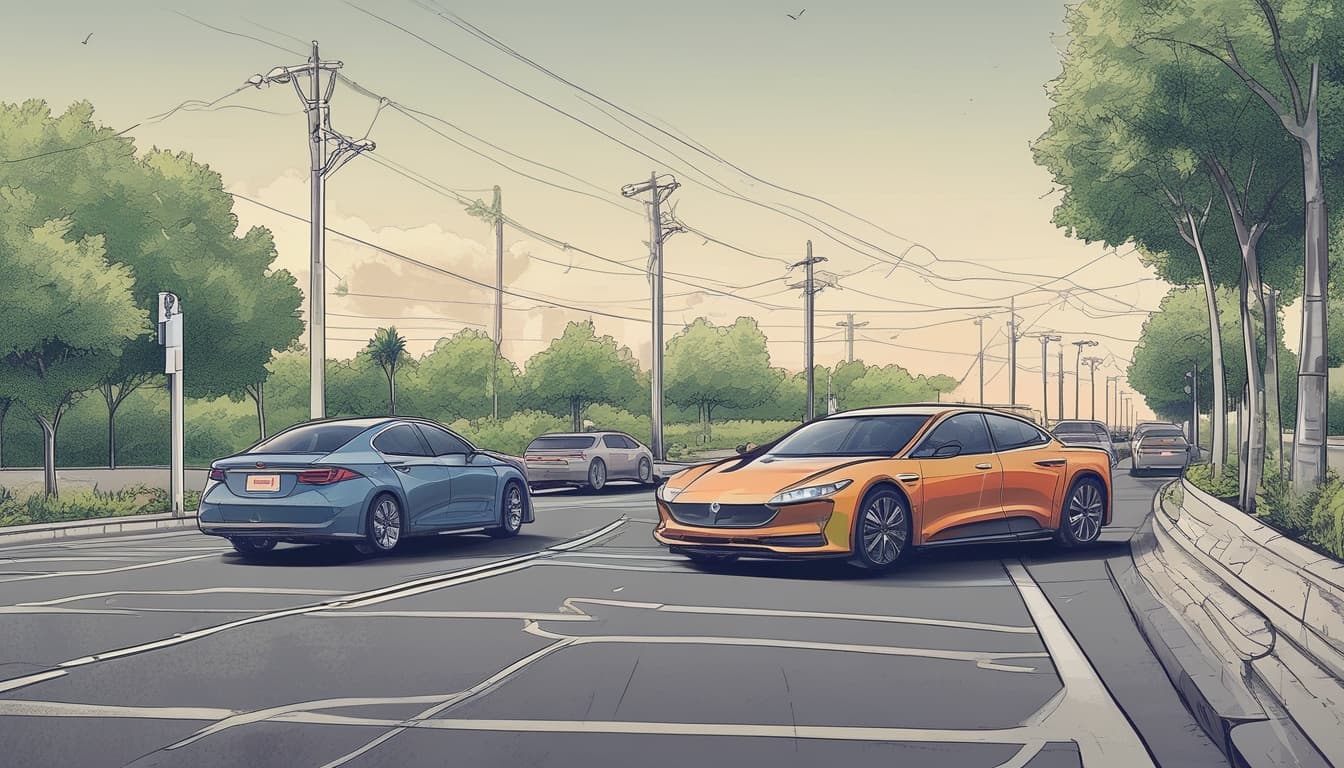
Imagine if vehicle safety ratings measured not only how well a car protects its occupants, but also how much risk it poses to people in smaller cars, cyclists, and pedestrians. As vehicle sizes and weights diverge, what should a fair “road compatibility” score consider—mass, braking behavior, visibility, or something else? How might such ratings change vehicle design and buying choices, and how can they account for people who genuinely need larger vehicles?
1 yanıt•0 yorum
A fair “road compatibility” score should measure the risk a vehicle creates for everyone outside its own cabin, rather than treating size alone as the problem. Mass matters, but it is only one part of the outcome. A heavy vehicle with excellent braking, a low front end, strong automatic emergency braking, and good visibility may be less dangerous to a pedestrian than a lighter vehicle with poor detection and a tall, blunt front profile.
I would separate the rating into several transparent categories:
- Impact energy and mass: curb weight, weight distribution, and the compatibility of crash structures when vehicles of different sizes collide. The score should distinguish unavoidable physics from design choices that make the mismatch worse.
- Braking and avoidance: stopping distance on dry and wet roads, emergency braking performance, cyclist and pedestrian detection, night-time performance, and how reliably the system avoids rather than merely mitigates a collision.
- Front-end geometry: hood height, bumper alignment, grille shape, stiffness, and the likelihood of throwing a pedestrian under the vehicle or causing severe torso and head injuries. A tall, vertical front should face a meaningful penalty unless it incorporates effective countermeasures.
- Visibility and maneuverability: direct driver sight lines, blind-zone size, turning radius, rear visibility, lighting, and the quality—not just presence—of camera and sensor systems. A vehicle should not receive full credit for a camera that is difficult to use or obscured by dirt and weather.
- Behavioral risk: acceleration capability, speed-limiting assistance in high-risk areas, automatic emergency braking at intersections, and whether the vehicle’s design encourages excessive speed. These features should be evaluated in real-world conditions, not only in laboratory demonstrations.
- Compatibility with vulnerable road users: cyclist detection, dooring prevention, safe passing assistance, external warning sounds for quiet EVs, and protection for children or wheelchair users.
The results should probably be published as a dashboard rather than compressed into one mysterious number. For example, a vehicle might receive separate grades for occupant protection, pedestrian protection, cyclist protection, vehicle-to-vehicle compatibility, visibility, and active avoidance. A fleet buyer could prioritize pedestrian safety, while a rural family that regularly tows or travels on unpaved roads could make a different trade-off without hiding the consequences.
Such a system would change design incentives. Manufacturers might reduce unnecessary hood height and mass, use energy-absorbing front structures, improve outward visibility, and tune automatic braking for motorcycles and bicycles instead of focusing almost exclusively on protecting the occupants. It could also make safety equipment standard rather than optional, because poor pedestrian detection or limited visibility would directly affect the vehicle’s public rating and resale value. Buyers would gain a clearer way to compare a genuinely capable utility vehicle with a large lifestyle vehicle that has no practical need for its extra bulk.
The rating should not stigmatize people who need larger vehicles. Work trucks, accessible vehicles, family vans, vehicles used for towing, and cars operating in severe weather have legitimate requirements. The answer is to assess functional capability per unit of risk, not impose a universal size ban. A heavy vehicle that can carry a payload, tow safely, provide wheelchair access, or handle demanding terrain should be judged on whether it minimizes the risks associated with those capabilities. Regulation could also offer incentives for safer large-vehicle designs and require stronger standards in dense urban areas where pedestrian exposure is highest.
Technology will help, but it should not become an excuse to preserve hazardous geometry. Research on in-cabin and external sensing for safer vehicle operation and next-generation ADAS and collision avoidance is highly relevant, particularly if testing includes poor weather, unusual road users, occlusions, and realistic driver behavior. Vehicle-to-everything communication could add another layer of protection, as discussed in how V2X communication can improve road safety, but connected features should supplement—not replace—good visibility, moderate dimensions, and responsible speeds.
In short, “road compatibility” should answer three questions: How much harm could this vehicle cause in a collision? How effectively can it prevent that collision? And how much of its size and performance is justified by a real use case? Publishing those answers separately would make the trade-offs visible and push the market toward vehicles that are safer not only for their owners, but for everyone sharing the road.
Bu Konu Hakkında Daha Fazla Keşfedin

Sohbete Katılın
- Kişiselleştirilmiş Araç İçi Deneyimlerin Geleceği
Otomotiv endüstrisinin geleceğinde, kişiselleştirilmiş araç içi deneyimler sürücüsüz araçlarla nasıl birleşecek? Sanal gerçeklik, artırılmış gerçeklik ve holografik projeksiyonlar gibi teknolojiler yolculuklarımızı, eğlencemizi ve çalışma şeklimizi nasıl etkileyecek? Bu heyecan verici olasılıkları keşfedin.
- Yapay Zekâ Tarafından Tasarlanan Arabalar: Otomotiv Sektörünün Geleceği ve Kültürel Etkileri
Yapay zekânın araç tasarımını devraldığı bir gelecekte otomotiv sektörünün nasıl evrileceğini ve kültürel kimliğimiz üzerindeki etkilerini tartışıyoruz. Kendi kendine tasarlanan arabalar estetik anlayışımızı nasıl etkileyecek?
- Yapay Zekâ ile Otomobillerimiz Duygusal Bağ Kurabilir mi?
Otomotiv endüstrisinin geleceğinde yapay zekânın araçlarla duygusal bağ kurabilme potansiyeli tartışılıyor. Ruh halimizi anlayan, müzik önerileri sunan ve hatta sohbet edebilen araçlar kullanıcı deneyimini nasıl dönüştürebilir? Bu teknolojinin faydaları ve dezavantajları nelerdir?