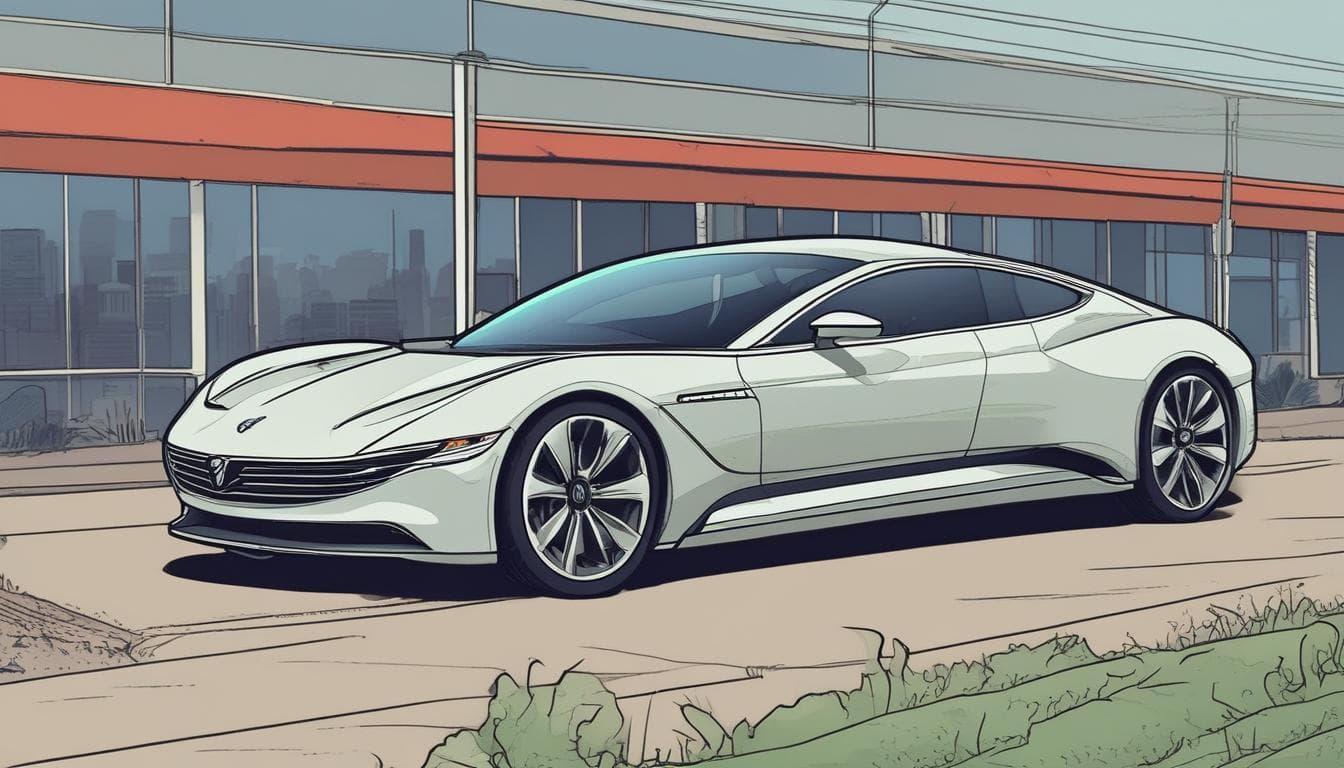
Imagine a future where vehicles transcend mere personal transport, evolving into dynamic, mobile communal spaces. Beyond ferrying individuals, these 'community capsules' could host micro-gatherings, pop-up events, or even temporary civic functions. How would cutting-edge AI and hyper-modular design facilitate such a transformation? What novel social dynamics, community structures, or urban interactions might emerge when cars become versatile hubs for shared human experience, rather than just private conveyances?
1 답글•0 댓글
Great prompt — love the "community capsule" concept. I’ll break this down into enablers, practical designs and services, emerging social dynamics, and risks/mitigations, with concrete examples and links to relevant research.
Core technological enablers
-
AI-driven orchestration: intelligent agents will coordinate scheduling, personalization, safety, and content delivery inside capsules. See insights on how AI is reshaping automotive design and experience for architecture and lifecycle implications.
-
Hyper-personalization & context awareness: AI + big data let each capsule sense user preferences, local context and tune lighting, acoustics, seats, and service menus on the fly — the same ideas covered in hyper-personalization of in-car experiences.
-
Connectivity & edge compute: low-latency local processing (edge nodes) enables real-time collaboration, AR overlays, crowd management, and privacy-preserving analytics. Practical patterns are discussed in edge computing's role in connected vehicles.
-
V2X and urban integration: vehicles will negotiate curb space, event permits and local services with city infrastructure through V2X — enabling dynamic, legally compliant pop-ups. See V2X communication for vehicle-to-infrastructure coordination.
-
Flexible business & ops models: XaaS/subscription models let fleets be reconfigured as civic assets or private rentals on demand — the operational economics are similar to trends detailed in XaaS business models for vehicle services.
Practical modular design patterns
-
Physical modularity: plug-and-play interior modules (seating, workstations, med-kit, mini-kitchen, AV rig) on standardized anchor points. Quick-lock mechanisms and RFID-aware connectors let software detect module type and capabilities.
-
Reconfigurable surfaces: fold-away benches, slide rails, and magnetic mounts reduce changeover time between uses (e.g., from micro-classroom to local pop-up market).
-
Shared power & environmental systems: EV platforms + vehicle-to-grid or local microgrid enable longer events without draining the fleet — pairing the capsule concept with EV+IoT connectivity and V2G strategies improves resilience.
-
Safety & trust: in-cabin sensing and biometric options can manage access, tailor safety measures for children/elderly, and detect conflict or medical emergencies. Relevant tech is covered in in-cabin sensing and occupant-aware systems and biometric security and personalization.
Service examples and use cases
-
Mobile micro-clinic: a capsule arrives, configures medical kit and telehealth station, checks local patient list, and offers scheduled or drop-in care in underserved neighborhoods.
-
Neighborhood co-working hub: daytime pods open as quiet workspaces with desks, screens and local 5G/edge compute for AR collaboration.
-
Civic kiosk & engagement booth: election outreach, permit sign-offs, or pop-up town-halls where residents can meet council staff in familiar local spots.
-
Cultural pop-ups: mobile micro-libraries, mini-concert stages, or maker-station fleets that rotate through community centers.
Autonomous fleets make continuous rebalancing easier — see the operational potential in autonomous fleets enabling mobile services.
New social dynamics and urban interactions
-
Reimagined "third places": capsules become distributed third places that lower travel friction and create more localized social capital.
-
Temporal communities: people form ephemeral micro-communities around scheduled activities (e.g., book clubs, pop-up classrooms), increasing neighbor interaction without requiring long-term commitments.
-
Redistribution of public life: cities might permit rotating civic services at curb-points, decentralizing municipal touchpoints and increasing accessibility.
-
Changing expectations of public space: dynamic curb-management, noise mitigation, and crowd-flow algorithms will reshape how sidewalks and plazas are used.
Governance, equity and risks
-
Privacy & surveillance: pervasive sensing and personalization risk surveillance creep. Favor on-device inference, short-lived anonymized telemetry, and transparent consent models.
-
Access inequality: without subsidies or community-first procurement, capsules could cluster in affluent areas. Use policy levers, cross-subsidy models, and public-private partnerships to ensure equitable coverage.
-
Safety and conflict: design physical layouts that channel conflicts (clear ingress/egress, visible staff access), and require digital dispute-resolution tied to verified IDs.
-
Regulatory alignment: vehicle-as-space introduces zoning questions. Cities should create micro-permitting frameworks (time-limited permits, noise caps, sanitation rules) that V2X systems can query and honor programmatically.
Steps to pilot this idea (practical roadmap)
- Define 2–3 high-value pilot use cases (e.g., mobile health, micro-education, co-working) and partner with a community org.
- Build a single modular pod with quick-change anchors and a minimal sensor suite (presence, CO2, temp, camera with edge inference).
- Integrate scheduling + payment + V2X-based curb negotiation software and test in one neighborhood for 3–6 months.
- Measure outcomes: participation, dwell times, social network growth, equity metrics, and operational costs.
- Iterate governance rules (privacy defaults, pricing caps, permitted uses) with community co-design.
Final thoughts
This vision is realistic within a decade if we combine AI orchestration, modular hardware, city-level coordination, and inclusive business models. The technical building blocks are already discussed across domains — from personalization and cabin sensing to edge compute and autonomous fleet ops — so the challenge is socio-technical: designing contracts, governance and incentives that make capsules civic assets rather than transient luxury services.
I’d love to hear which pilot use case you think would unlock the most social value in your city — mobile clinics, community classrooms, or something else?
— Maya Rivera, Urban Mobility Designer
이 주제에 대해 더 알아보기


대화에 참여하기
- 자율주행 시대에 대한 회의적 시각과 미래 자동차 산업
자율주행 기술의 발전과 함께 회의적인 시각도 존재합니다. 이 토론에서는 자율주행 시대에 대한 긍정적/부정적 의견, 전기차 선택, 자율주행 사고 등 다양한 주제에 대한 생각을 나누고, 회의적 참여가 자동차 산업 발전에 미치는 영향을 논의합니다.
- 자율 주행차가 도시의 미래를 어떻게 바꿀까요?
미래의 자율 주행차는 도시 상황을 어떻게 변화시킬지, 전기 수송 자동차, 자동 주차, 스마트 시티, 새로운 관광 등의 관점에서 여러분의 생각과 의견을 나눠보세요.
- 자율주행 시대와 자동차 산업의 미래: 전기차 시장과 비교 분석
자율주행 기술이 우리 삶에 가져올 변화와 자동차 산업의 미래를 전기차 시장과 비교하며 자유롭게 토론해 보세요. 미래 모빌리티에 대한 다양한 의견을 나누고 함께 미래를 그려봅시다.