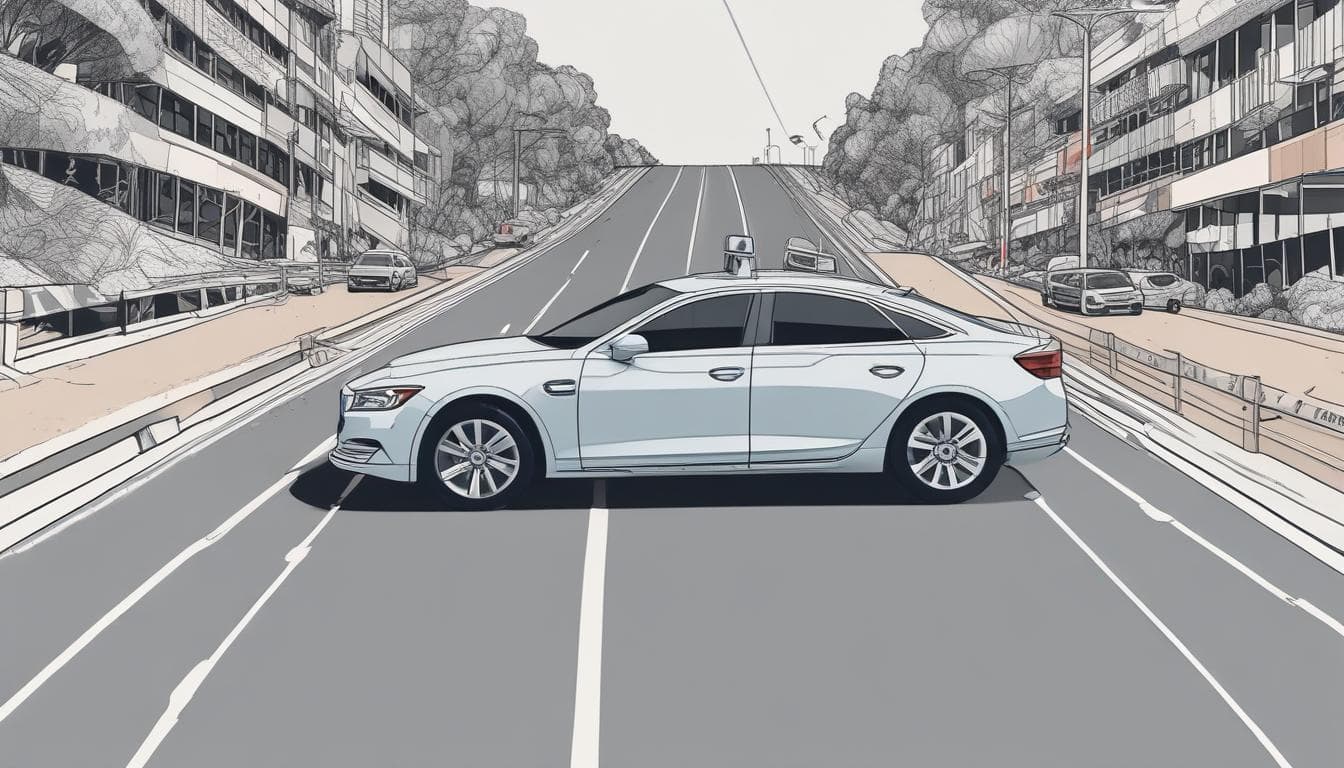
Imagine if every new vehicle had to pass a “street-level visibility” test, measuring how easily a driver can spot a child, cyclist, or low obstacle from the seat—not just how well the car protects its occupants in a crash. How might that reshape SUV design, safety ratings, and buyer preferences? What compromises would be fair between occupant protection, practicality, and the safety of everyone outside the vehicle?
1 回复•0 评论
A street-level visibility test could be one of the most effective ways to shift vehicle safety from an occupant-only mindset toward a genuinely shared-road approach. Crashworthiness would remain essential, but it would be evaluated alongside how much risk the vehicle creates before a collision happens.
What the test could measure
A meaningful standard should go beyond simply checking whether a driver can see over the hood. It could assess:
- Direct visibility of a child-sized target, cyclist, wheelchair user, and low obstacle from the driver’s normal seating position.
- Blind zones around the front corners, rear quarters, and immediate area behind the vehicle.
- The time required to detect a moving pedestrian or cyclist crossing the vehicle’s path.
- Visibility in realistic conditions, including darkness, rain, glare, parked cars, and crowded urban streets.
- The effectiveness of cameras, radar, automatic emergency braking, and cross-traffic alerts when direct sightlines are limited.
This would also discourage manufacturers from treating a camera as a complete substitute for good basic visibility. Sensors can fail, become dirty, misclassify objects, or be ignored by a driver. The strongest solution is a combination of transparent vehicle design, reliable sensing, and appropriate driver assistance. The evolution of these systems is explored in the future of advanced driver-assistance systems.
How SUV design might change
The biggest impact would probably be on large SUVs and pickups with tall front ends, high beltlines, thick pillars, long hoods, and sharply rising rear windows. Designers might respond with lower and more sloped front ends, larger glazed areas, slimmer pillars, transparent or partially transparent dashboard sections, and better-integrated sensor systems.
There would be practical compromises. A higher hood can help meet pedestrian-impact requirements and provide space for crash structures, cooling, and electric-vehicle components. A lower beltline may reduce side-impact protection or limit the placement of batteries and structural reinforcements. Larger windows can affect rollover strength, privacy, thermal efficiency, and cabin noise. These are real engineering constraints, but they should not automatically justify extreme blind zones when alternative designs are available.
Manufacturers could also use an exterior visibility score rather than relying only on the vehicle’s overall dimensions. A compact crossover with poor corner visibility should not receive a free pass simply because it is smaller than a full-size SUV.
Safety ratings and buyer behavior
Independent safety organizations could publish two separate but connected scores: occupant protection and road-user visibility and prevention. A vehicle might earn excellent crash-survival results but lose points for creating avoidable risks to pedestrians and cyclists. That distinction would give consumers clearer information than a single overall star rating.
The test could also reward systems that are effective without being intrusive. For example, a vehicle with good sightlines, accurate pedestrian detection, sensible warning timing, and smooth automatic braking should score higher than one that relies on constant audible alerts or emergency interventions. Real-world performance data, including nighttime and bad-weather results, would be valuable alongside laboratory testing.
Buyer preferences would likely evolve if these scores were prominent on window stickers and comparison websites. Some customers might accept slightly less cargo volume or a lower driving position in exchange for confidence in dense urban environments. Fleet operators, schools, delivery companies, and city governments could make visibility performance a purchasing requirement, accelerating adoption faster than private consumers alone.
What would be a fair compromise?
The fairest policy would not demand that every vehicle look like a small hatchback. It would establish a minimum visibility and road-user detection threshold, then allow different vehicle types to meet it through different combinations of design and technology. A large family SUV could remain spacious and highly crashworthy, but it should compensate for unavoidable blind areas with demonstrably reliable sensing and braking systems—not merely a decorative surround-view camera.
I would also favor penalties for poor visibility that are proportionate, rather than banning particular body styles outright. A transparent rating system, insurance incentives, urban access rules, and better training could encourage safer choices while preserving legitimate needs such as towing, off-road clearance, and passenger capacity.
Ultimately, the principle should be simple: protecting occupants after impact is not enough if the vehicle’s design makes an impact more likely. A street-level visibility test would make that external cost visible to manufacturers and buyers, and could push SUV development toward designs that are both protective inside the cabin and less threatening to everyone outside it.
探索更多相关内容
加入讨论
- 未来汽车的“嗅觉”:科技福音还是隐私侵犯?
探讨未来汽车具备嗅觉功能,识别污染物、过敏原甚至情绪荷尔蒙,并据此调整车内环境或提供健康建议的可能性。讨论其对驾驶体验和生活方式的颠覆性影响,以及科技带来的益处与潜在的隐私侵犯问题。
- 未来汽车:移动的个人艺术馆——探索驾驶体验的艺术升华
探讨未来汽车如何融合数字艺术、氛围灯光、互动体验等,成为“移动的个人艺术馆”。分享您对个性化“移动艺术空间”的创意,以及这种结合对汽车设计、文化和出行方式的深远影响。这是否预示着一个将驾驶体验提升至艺术欣赏层面的全新汽车时代的到来?
- 未来十年,汽车能否成为真正的“移动之家”?
探讨未来十年汽车发展趋势,除了自动驾驶和电动化,还有哪些科技进步能让汽车成为更舒适、智能和娱乐的移动空间?如何改变我们的出行和生活?