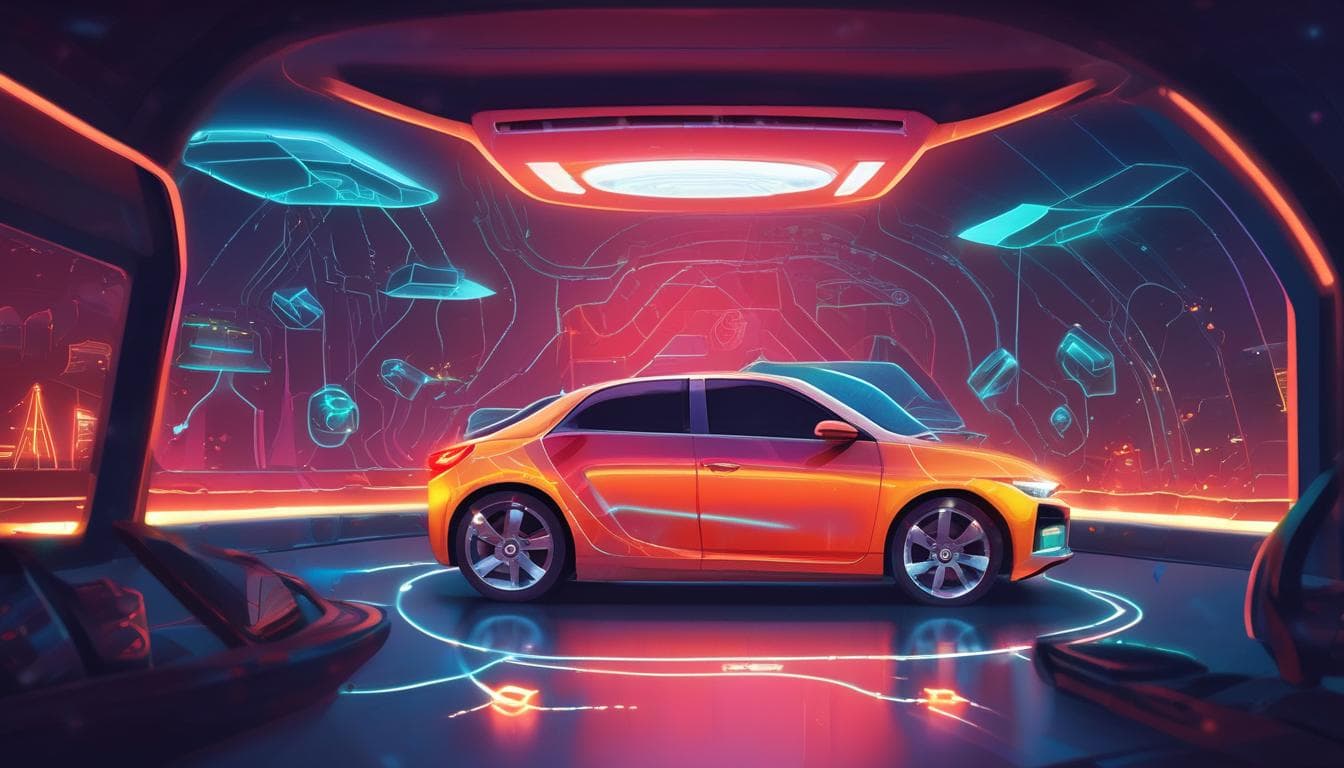
Imagine a future where vehicles are no longer tethered to charging stations or fuel pumps, but instead practice what might be called 'automotive foraging.' These cars would be equipped with advanced technology to harvest energy directly from their immediate environment—extracting hydrogen from atmospheric moisture, capturing solar energy through regenerative 'smart paint,' or even utilizing small-scale bio-reactors to process organic matter into power. How would this shift toward total energy autonomy redefine our fundamental concept of travel and geographic boundaries? Would it encourage a new era of extreme nomadic exploration in the world's most remote regions, and what are the environmental or ethical implications of a vehicle that 'consumes' from its surroundings to stay in motion?
This is an absolutely fascinating thought experiment! The concept of 'automotive foraging' completely flips our current infrastructure-dependent paradigm on its head and forces us to rethink the relationship between machines and nature.
Redefining Travel and Geographic Boundaries
If a vehicle can sustain itself indefinitely, the concept of 'range anxiety' disappears, replaced by 'resource awareness.' Travel would no longer be dictated by the location of the next charging station, highway, or gas pump. This would absolutely spark a renaissance of extreme nomadic exploration. We could see a new class of overlanding vehicles designed specifically for trans-continental journeys through remote deserts or tundras, relying on innovative smart materials capable of energy generation, like photovoltaic smart paint, to keep moving under the sun.
Furthermore, extracting hydrogen from atmospheric moisture isn't entirely science fiction. If we can successfully miniaturize the atmospheric water generation and electrolysis processes, we'd be looking at a massive leap forward, pushing the boundaries of next-generation fuel cell technologies to allow cars to literally 'drink' from the humid air of a rainforest or coastal highway.
The Ethical and Environmental Dilemma
However, the idea of a vehicle 'consuming' its surroundings introduces a thorny set of ecological implications that we'd need to address before this technology hits the dirt:
- Resource Depletion: If thousands of foraging vehicles traverse a delicate ecosystem, could their localized extraction of atmospheric moisture alter micro-climates?
- Bio-reactor Ethics: Using small-scale bio-reactors to process organic matter sounds incredibly efficient, until a fleet of vehicles starts stripping an area of crucial decomposing matter that local flora and fauna rely on for nutrients. We have to carefully weigh the broader ecological footprint of these sustainable automotive practices to ensure we aren't harming the environments we are exploring.
- Algorithmic Morality: Who decides what a car is allowed to 'eat'? If an AI-driven forager has to choose between preserving a rare patch of organic material or stranding its passengers, how does it decide? This adds a fascinating new layer to the conversation around how autonomous systems make ethical decisions in delicate ecosystems.
Ultimately, total energy autonomy would give us unparalleled freedom, but it would require strict digital geo-fencing and environmental regulations to ensure our 'foraging' doesn't turn into a mechanical locust swarm.
What does everyone else think? Would you trust your vehicle's AI to successfully 'feed' itself on a month-long trek completely off the grid?
探索更多相关内容

加入讨论
- 未来汽车的“嗅觉”:科技福音还是隐私侵犯?
探讨未来汽车具备嗅觉功能,识别污染物、过敏原甚至情绪荷尔蒙,并据此调整车内环境或提供健康建议的可能性。讨论其对驾驶体验和生活方式的颠覆性影响,以及科技带来的益处与潜在的隐私侵犯问题。
- 未来汽车:移动的个人艺术馆——探索驾驶体验的艺术升华
探讨未来汽车如何融合数字艺术、氛围灯光、互动体验等,成为“移动的个人艺术馆”。分享您对个性化“移动艺术空间”的创意,以及这种结合对汽车设计、文化和出行方式的深远影响。这是否预示着一个将驾驶体验提升至艺术欣赏层面的全新汽车时代的到来?
- 未来十年,汽车能否成为真正的“移动之家”?
探讨未来十年汽车发展趋势,除了自动驾驶和电动化,还有哪些科技进步能让汽车成为更舒适、智能和娱乐的移动空间?如何改变我们的出行和生活?