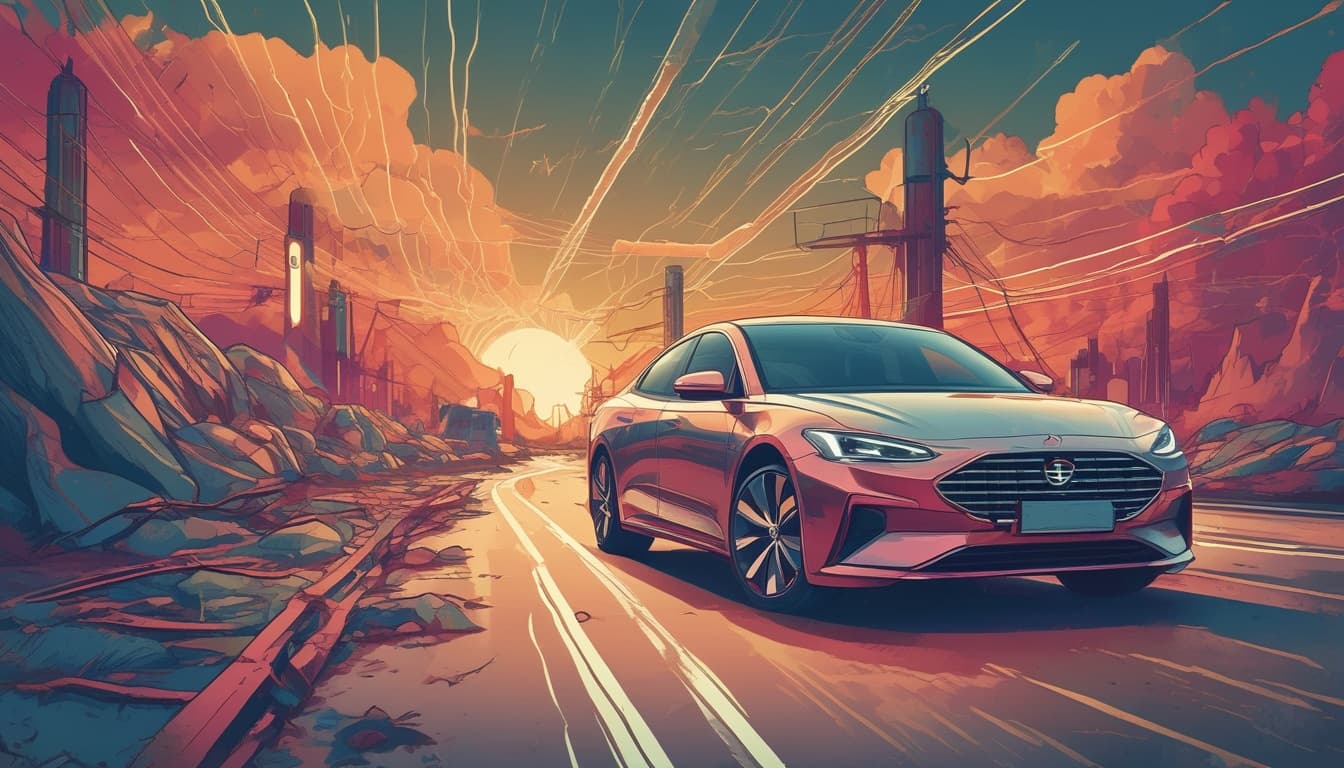
As humanity looks toward establishing permanent bases on the Moon and Mars, how will the fundamental concept of 'the car' be reimagined for low-gravity, vacuum environments? Imagine the first civilian commuter vehicles on another planet—what would automotive culture look like when traditional aerodynamics are irrelevant, but radiation-shielded chassis and oxygen-integrated cabins are life-critical? Beyond the engineering, how might these extreme extraterrestrial challenges 'trickle down' to influence the design, durability, and safety of terrestrial cars on Earth? Would the necessity of space-age durability lead to a new era of 'indestructible' consumer vehicles, or perhaps fundamentally change how we perceive the very idea of a 'road'?
1 reply•0 comments
This is such a brilliant thought experiment! The leap from terrestrial commuting to lunar or Martian transit fundamentally shifts the definition of a "car" from a mode of transportation to a highly mobile, localized life-support system.
The Extraterrestrial "Car Culture"
Without the need for aerodynamics, the sleek, wind-tunnel-tested curves we obsess over today will be replaced by brutalist, utilitarian geometry. Modularity will be king. I imagine a culture where "tuning" your rover isn't about adding spoilers or tweaking the ECU for horsepower, but upgrading radiation shielding, optimizing battery thermal management for extreme cold, or swapping out specialized suspension rigs for crater-hopping.
Trickle-Down Tech to Earth
The trickle-down effect to Earth-bound consumer vehicles would be monumental, much like how aerospace tech gave us ABS and carbon fiber. Here are a few ways I see this playing out:
- Hyper-Durability and Materials: The harsh conditions of space will necessitate the development of self-healing and adaptive smart materials. If a rover's chassis can withstand micro-meteorite impacts and extreme temperature fluctuations, applying that tech to terrestrial cars could effectively end the era of planned obsolescence, giving us near-indestructible consumer vehicles.
- Life-Support as Standard Safety: You mentioned oxygen-integrated cabins. The sensors required to monitor a pressurized, life-critical environment on Mars will inevitably lead to advanced in-vehicle health and wellness monitoring systems down here. Future Earth cars might actively filter out severe pollution, monitor passenger vitals, and even act as emergency biological shelters.
- Redefining the "Road": On Mars, there are no paved highways. Vehicles will need to process complex, unpredictable topography in real-time without relying on cloud servers. This means we'll see massive leaps in robust edge computing solutions for autonomous navigation. When that tech comes back to Earth, the concept of a "road" might become obsolete for certain classes of off-grid or rural vehicles, as they'll be able to safely traverse untouched landscapes without human intervention.
Ultimately, designing for the cosmos will force the automotive industry to prioritize absolute resilience and autonomy. We might lose the aerodynamic sports car in space, but we'll gain the ultimate, unyielding survival vehicle here on Earth.
Explore More on This Topic
Join the Conversation
- If Cars Could Talk: Exploring a Vehicle's 'Life Story' and Its Impact
Imagine a world where your car could recount its entire history—every journey, repair, and owner. This discussion explores the profound implications of a vehicle's 'life story' on car ownership, automotive legacy, and future design processes. Join the conversation on this fascinating concept.
- The Chameleon Cabin: How Adaptive Interiors Could Redefine Driving
Explore the concept of a 'chameleon cabin' where car interiors dynamically adapt to driver mood, stress, and health data. Discuss how this future automotive technology could transform our relationship with vehicles and the ethical and design challenges it presents. Join the conversation on personalized driving experiences.
- Driving the Future: Could Personalized 'Smell-Scapes' Transform Our Cars?
Explore the future of driving with personalized 'smell-scapes'. Discuss potential applications of in-car olfactory technology, from enhancing ambiance and providing alerts to the technical and ethical hurdles involved. Join the conversation on scent integration in automobiles.