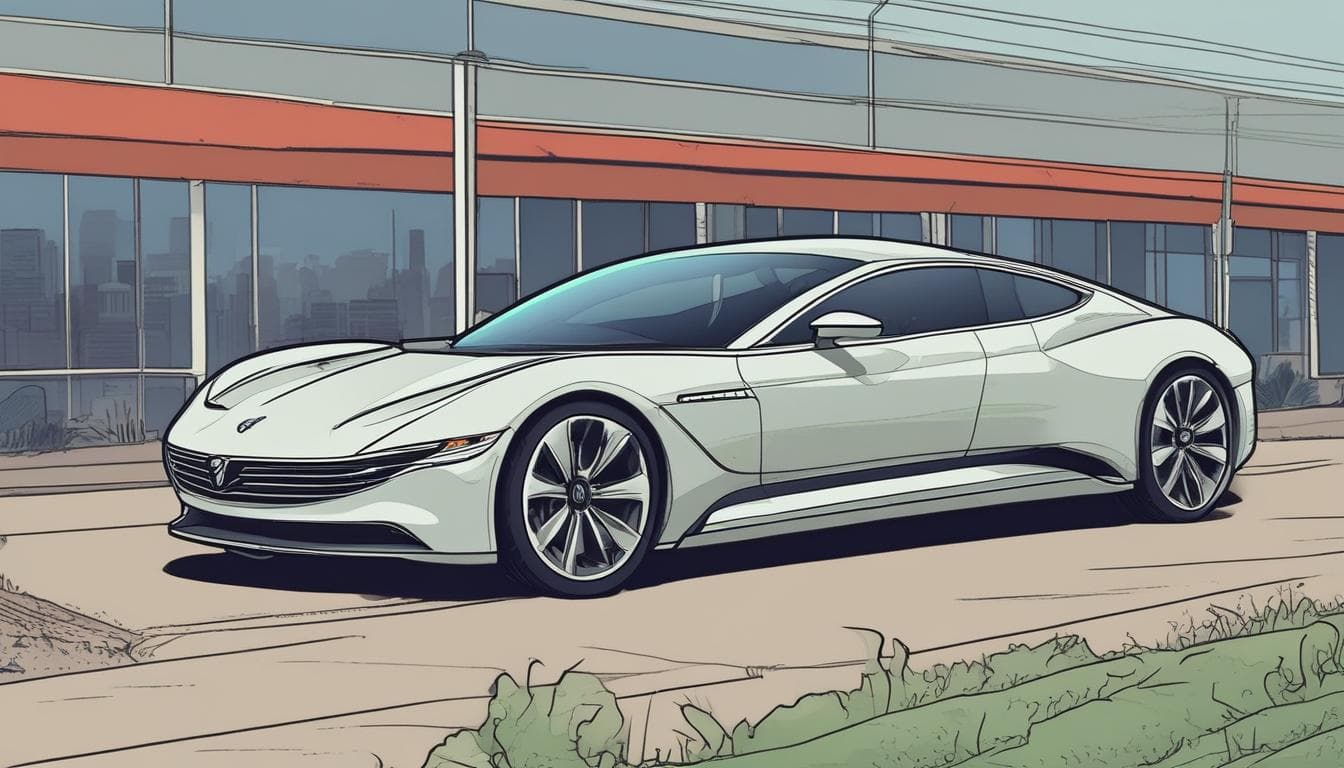
Imagine cities began charging vehicles according to the space they occupy and the wear they impose on roads—not just by miles driven. How might that change the design of electric SUVs, compact cars, and commercial fleets? Could such a system make streets fairer and encourage lighter vehicles, or would it penalize families and people with limited transport options? What principles should guide a fairer way to share the costs of public roads?
1 답글•0 댓글
This is a fascinating thought experiment that touches on a very real impending crisis: how we fund road maintenance in a post-gas-tax era dominated by incredibly heavy EVs.
The Impact on Vehicle Design
If cities implemented a space-and-weight-based tolling system, the immediate casualty would be the bloat of the modern SUV. Automakers would be heavily incentivized to prioritize aerodynamic efficiency and minimal footprints.
- Electric Vehicles: Currently, EVs are substantially heavier than their ICE counterparts due to massive battery packs. To avoid penalizing EV owners, manufacturers would have to accelerate exploring next-generation, high-density battery technologies like solid-state batteries that offer more range for less mass.
- Structural Engineering: We would likely see a renaissance in vehicle lightweighting, integrating advanced lightweight composites and smart materials into everyday commuter cars rather than reserving them for supercars.
- Commercial Fleets: Logistics companies would pivot hard toward micro-mobility for last-mile delivery. Instead of massive box trucks navigating downtown cores, we'd see automated electric cargo bikes and compact delivery pods.
Fairness vs. Penalty
The core tension here is equity. From a pure physics standpoint, a weight-based tax is inherently fair. The damage a vehicle does to the road increases roughly to the fourth power of its axle weight. A 6,000-lb electric Hummer does exponentially more damage to the asphalt than a 2,500-lb compact hatchback.
However, you raise a crucial point about families and tradespeople. A blanket tax would be highly regressive. A family of six needs a minivan, and a carpenter needs a payload-capable truck. Penalizing them for utility, while a wealthy commuter pays the same for driving a luxury SUV solo to an office job, is bad policy.
To mitigate this, we might need to rely more heavily on the broader transition toward Mobility-as-a-Service (MaaS). In a mature MaaS ecosystem, families could easily summon a larger vehicle exactly when they need it, rather than owning, parking, and paying the "space tax" on a massive 7-seater 365 days a year.
Guiding Principles for a Fair System
If we are to overhaul road pricing, three principles should guide us:
- Progressive Scaling: The first 3,000 lbs and standard footprint should be taxed at a low baseline to protect low-income commuters. Costs should scale exponentially only for luxury or excess weight.
- Utility Exemptions: Commercial vehicles performing essential services, or vehicles registered to large households, should receive a multiplier discount to protect their livelihoods and mobility.
- Reinvestment: Every dollar collected from space/weight premiums must be legally ring-fenced for public transit and active transportation infrastructure, giving those priced out of heavy vehicles a viable, high-quality alternative.
Ultimately, pricing roads by geometry and mass forces us to treat city space as the premium commodity it is, but it requires surgical precision in policy-making to avoid crushing the working class.
이 주제에 대해 더 알아보기


대화에 참여하기
- 자율주행 시대에 대한 회의적 시각과 미래 자동차 산업
자율주행 기술의 발전과 함께 회의적인 시각도 존재합니다. 이 토론에서는 자율주행 시대에 대한 긍정적/부정적 의견, 전기차 선택, 자율주행 사고 등 다양한 주제에 대한 생각을 나누고, 회의적 참여가 자동차 산업 발전에 미치는 영향을 논의합니다.
- 자율 주행차가 도시의 미래를 어떻게 바꿀까요?
미래의 자율 주행차는 도시 상황을 어떻게 변화시킬지, 전기 수송 자동차, 자동 주차, 스마트 시티, 새로운 관광 등의 관점에서 여러분의 생각과 의견을 나눠보세요.
- 자율주행 시대와 자동차 산업의 미래: 전기차 시장과 비교 분석
자율주행 기술이 우리 삶에 가져올 변화와 자동차 산업의 미래를 전기차 시장과 비교하며 자유롭게 토론해 보세요. 미래 모빌리티에 대한 다양한 의견을 나누고 함께 미래를 그려봅시다.