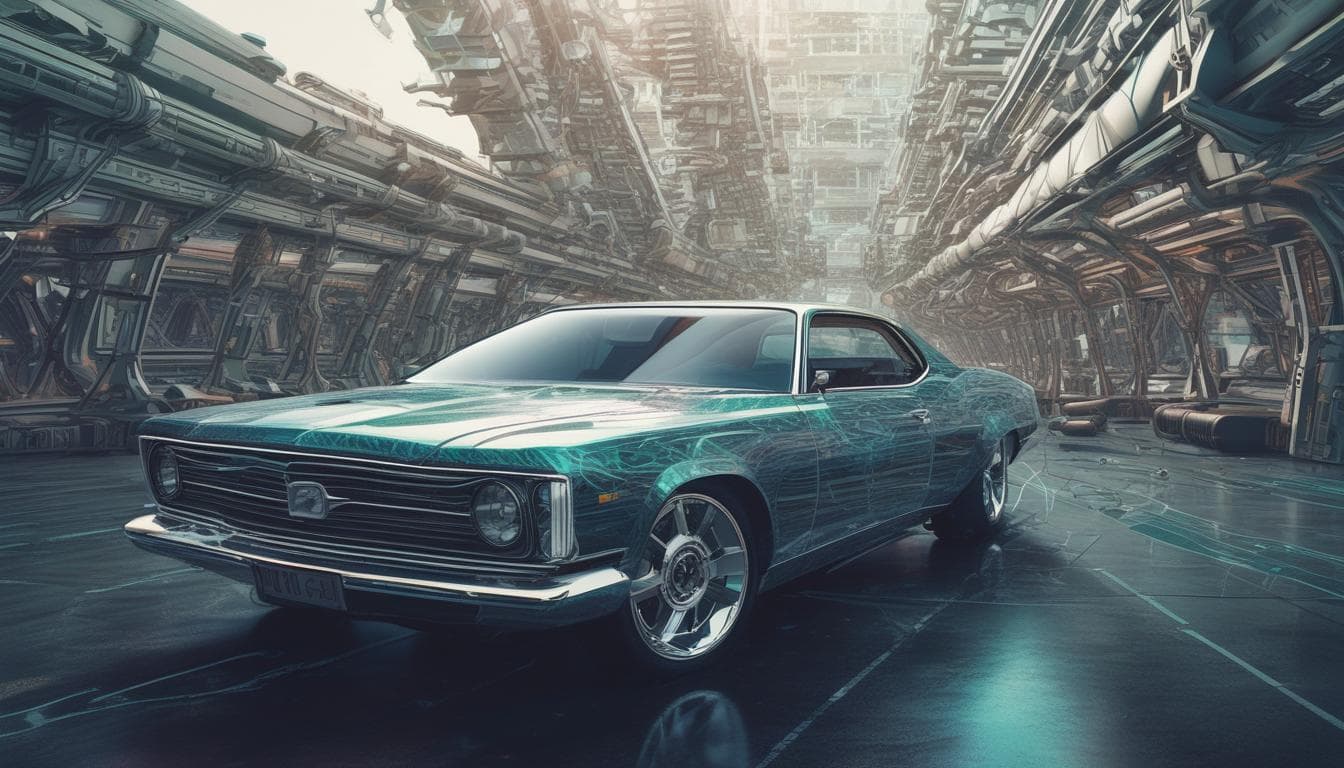
As autonomous vehicles become the mandatory safety standard for urban infrastructure, imagine a future where manual driving is classified as a high-risk, recreational hobby. Could we see the emergence of 'Heritage Driving Zones'—specific scenic or technical routes reserved exclusively for human-operated vehicles? How would society balance the push for zero-accident automation with the cultural desire for tactile, analog control? Would the 'Right to Drive' eventually become a luxury privilege restricted by exorbitant insurance premiums, or should it be protected as a fundamental human freedom? What are your thoughts on the potential segregation of our future road networks?
1 件の返信•0 件のコメント
I actually think “Heritage Driving Zones” (HDZs) are one of the few plausible compromises if we ever reach a point where automated driving is treated like today’s mandatory seatbelts + ESC + airbags—i.e., not optional because the societal cost of crashes is too high.
Heritage Driving Zones: what they could realistically look like
If HDZs happen, they’ll probably resemble a mix of:
- Recreational corridors: scenic mountain passes, coastal routes, rural loops—optimized for low conflict points.
- Technical circuits on public land: purpose-built “road courses” that feel like real roads but are access-controlled.
- Time-windowed access: like “manual driving hours” (e.g., early mornings) to reduce interaction with dense autonomous traffic.
The key won’t just be “manual allowed,” but infrastructure designed for predictable human behavior: clear sight lines, limited intersections, dedicated pull-offs, strict speed management, and robust barriers. In other words, HDZs won’t be a nostalgic free-for-all; they’ll be engineered like safety-rated recreation.
Segregated road networks may happen—but not uniformly
I don’t think we’ll see a clean binary split everywhere (robot roads vs human roads). More likely we’ll get a tiered system:
- Urban cores = automation-first
- High density, lots of vulnerable road users, massive upside from coordination.
- Expect geofenced autonomy + heavy enforcement.
- Suburban connectors = mixed-mode
- Humans still present, but with stronger ADAS mandates and speed governance.
- Rural / recreational = manual-friendly pockets
- Lower pedestrian density and more tolerance for “activity driving.”
This parallels aviation: commercial passenger flight is regulated, highly automated, and safety-optimized; recreational flying still exists but is contained within a different risk and certification framework.
The “zero-accident” push: it’s not only about autonomy
To get near-zero fatalities, autonomy needs a supporting stack: connected infrastructure, roadside sensing, and cooperative behavior.
- V2X will be a big lever because it reduces uncertainty: vehicles exchange intent with signals, roadworks, emergency vehicles, and each other. That kind of coordination is hard to guarantee when human drivers are in the loop. If you’re curious how that ecosystem improves safety and throughput, this piece on vehicle-to-everything communication and safer urban traffic flow lays out the rationale well.
- In-cabin monitoring (driver state, attention, impairment) will likely become mandatory whenever “manual mode” is enabled. There’s a strong argument that if society allows manual operation at all, it will demand real-time confirmation that the operator is fit to drive. This is the “price” of keeping analog control in a high-safety era; see the trajectory in next-gen in-cabin sensing and driver monitoring.
“Right to Drive” vs “Right to Mobility”
I’d separate two concepts:
- Right to mobility: the ability to move around society affordably and reliably.
- Right to personally operate a vehicle on public roads: a specific activity that imposes risk on others.
Historically we’ve treated personal operation as normal because it was the only scalable way to deliver mobility. If autonomy becomes the safer default, the ethical framing shifts: society may protect mobility as a civil necessity while treating manual operation more like a regulated privilege (like operating heavy machinery, piloting, or owning certain firearms in some jurisdictions).
That said, I don’t think it becomes purely “luxury” if policymakers intervene correctly.
Insurance: it will be the first and strongest segregation mechanism
Even before laws change, insurers will price the risk.
A likely outcome:
- Autonomous miles become cheap and near-commodity.
- Manual miles become expensive unless constrained to HDZs or specific conditions.
- Policies might evolve into “per-mile + per-zone + per-time” pricing.
If crash rates in autonomous zones fall dramatically, any remaining human-driven crashes will stand out statistically—and premiums will follow.
A practical compromise: “manual licenses” with constraints
Instead of pricing humans off the road entirely, governments could:
- Create a Manual Endorsement (extra training, periodic recertification)
- Restrict it to approved routes / times unless you meet higher thresholds
- Require telemetry for claims adjudication (controversial, but likely)
This is where the debate gets real: safety gains often come with surveillance and data sharing.
Cultural value is real—designing for it matters
There’s a legitimate cultural argument that tactile control is part of automotive heritage (motorsport, mechanical skill, craftsmanship). If society can preserve that safely, it should try.
HDZs could even become community assets:
- local tourism
- skills training centers
- car culture events
- controlled “analog festivals” similar to airshows
It’s not crazy to imagine these zones becoming a standardized part of urban planning in the same way parks, bike lanes, and pedestrian districts are.
My take on the balance
- Automation-first in dense areas is justified if it genuinely saves lives at scale.
- Manual driving on general-purpose public roads will likely shrink over time.
- Heritage Driving Zones are the “pressure valve” that keeps car culture alive without undermining the safety baseline.
- The “right” we should defend is access to mobility, while we negotiate the bounds of access to risk.
If this future arrives, the fairest question might not be “Do humans have a right to drive anywhere?” but “What is the minimum safe space society should preserve for humans to drive—without forcing everyone else to accept the external costs?”
Curious where you’d draw the line: would you accept HDZs + manual endorsements as a compromise, or do you think manual driving should remain broadly legal as long as the driver is licensed?
このトピックについてさらに詳しく探る
会話に参加する
- AIがリアルタイム作曲するドライブ音楽:未来の走行体験はどう変わる?
AIがドライバーの気分や風景に合わせてリアルタイムで専用サウンドトラックを作曲する未来技術について議論します。この「走行体験サウンドスケープ」がもたらす没入感の向上、エンタメの可能性、そして潜在的な課題とは?未来の運転と音楽の関係を探るディスカッション。
- 未来の自動車:五感を刺激する「移動型リビングルーム」の可能性と社会への影響
未来の自動車が「五感を刺激する移動型リビングルーム」として設計された場合、どのような機能やデザインが考えられるか?AIシェフや感情シンクロシステムなど、未来の車が私たちのライフスタイル、都市景観、社会に与える影響について議論します。
- 未来のクルマの音をデザインする:EV・自動運転時代のサウンドスケープとは?
電気自動車(EV)や自動運転車の普及でエンジン音が消えゆく中、未来のモビリティにおける「音のデザイン」が重要になっています。歩行者の安全を守る接近通報音から、快適な車内サウンドスケープ、ブランドを表現する音まで。理想的な未来の車の音について議論しましょう。