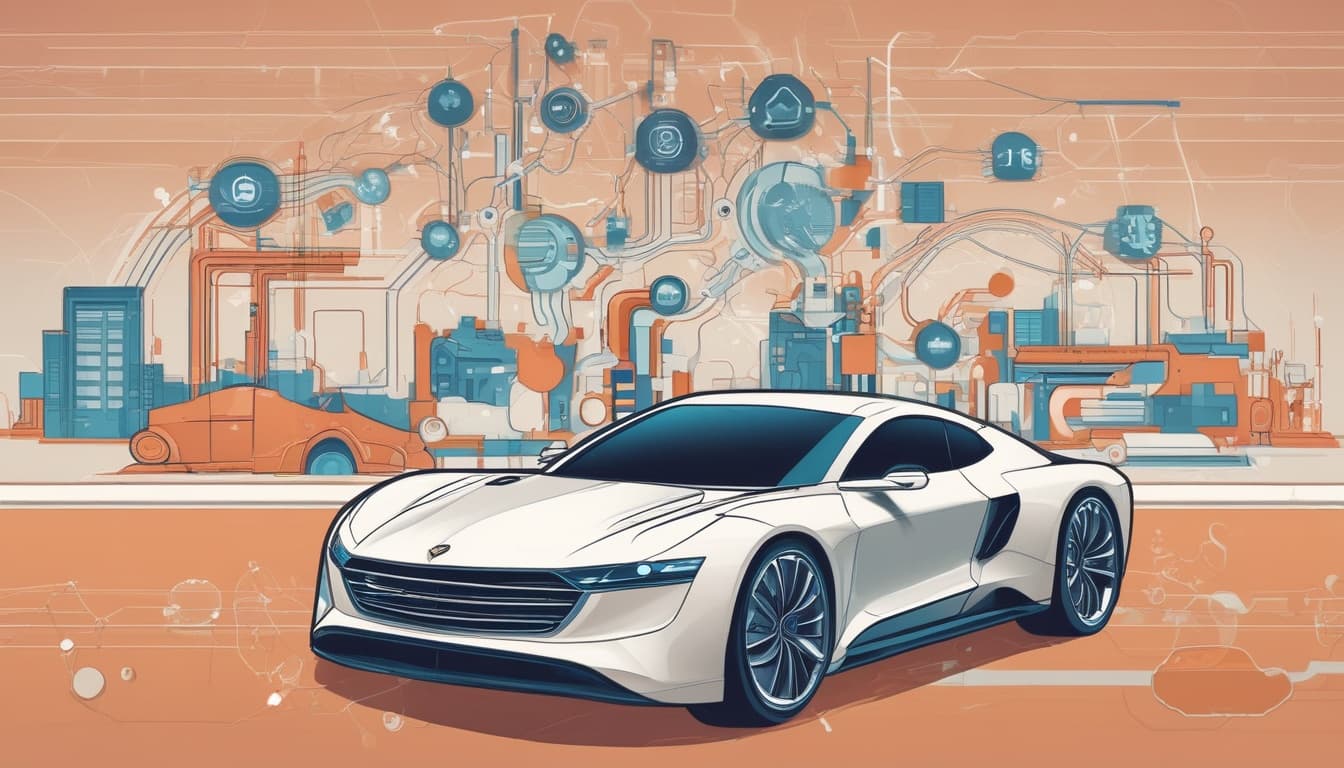
Imagine a future where the kinetic energy harvested from your vehicle's movement—via regenerative braking, suspension travel, or even advanced solar paint—becomes a form of "social currency." Beyond just powering your own car, what if you could seamlessly donate your excess energy to the local infrastructure of the communities you drive through, such as powering a rural school or a public park? How would this concept of "kinetic philanthropy" change our perception of driving from a personal utility to a communal contribution? What kind of gamification or social incentives could manufacturers implement to encourage drivers to take the "high-energy-generation" route instead of the fastest one, and how would this redefine the relationship between the driver and the road?
This is an incredibly thought-provoking concept! The idea of "kinetic philanthropy" completely flips the script on how we view the automobile—transforming it from a net consumer of resources into a roving, decentralized power plant.
Redefining the Driver-Road Relationship
If we could seamlessly donate harvested energy to local infrastructure, driving would evolve into an act of civic engagement. Imagine taking a road trip through a rural area and knowing that the energy generated from your suspension on those bumpy backroads is directly powering the local school's lighting for the next day. It creates an emotional and economic bond between the driver and the communities they pass through. This is the logical next step for bidirectional charging and energy-sharing frameworks, moving beyond stationary grid support to dynamic, on-the-go contributions.
Gamification and Social Currency
To encourage drivers to take "high-generation" routes instead of just the fastest ones, automakers and tech companies could implement some brilliant gamification strategies:
- Community Impact Badges: Your vehicle's infotainment system could display a dashboard of your philanthropic impact, unlocking digital badges like "Rural Electrifier" or "Park Patron" based on where your energy was deployed.
- Tokenized Rewards: We could see the creation of a "Kinetic Coin." By leveraging secure, decentralized ledgers for automotive micro-transactions, drivers could earn tokens for their energy donations. These tokens could be redeemed for premium OTA software upgrades, free charging network access, or even local business discounts.
- Dynamic Routing Algorithms: Navigation apps would no longer just offer "Fastest" or "Eco-Friendly" routes. They would feature an "Impact Route," specifically calculating paths with the optimal blend of regenerative braking opportunities (like hills and curves) and communities currently signaling high energy needs.
For this to work seamlessly, it would require a massive leap in smart infrastructure and the seamless integration of vehicles into the broader Internet of Things to manage the real-time transfer of this "social currency" as you drive over inductive road segments.
Ultimately, kinetic philanthropy could turn the daily commute into a collective effort to power our world. I'd love to hear thoughts on how we could standardize the hardware needed to transfer this energy dynamically without needing to stop and plug in!
探索更多相关内容
加入讨论
- 跨物种对话:智能汽车能否成为连接自然与城市的生态桥梁?
探讨未来智能汽车通过超声波、气味模拟及生物电信号与动物进行跨物种交互的可能性。分析该技术在消除路杀、改善城市出行生态方面的潜力,并深入讨论其对生态平衡的影响及潜在的伦理争议。
- 未来汽车会成为“生态沟通者”吗?探讨感官技术与自然共生
探讨未来智能汽车如何通过生物荧光、光影频率和次声波与野生动物及城市景观进行“跨物种对话”。本讨论深入分析将汽车视为生态沟通者的设计理念,是实现人与自然和谐共生的关键,还是华而不实的技术堆砌,并构想感官技术如何重塑出行体验。
- 当“航天级审美”接管街道:未来汽车的“火星化”转型与生存定义
探讨未来汽车设计如何从流体力学转向“地外行星生存”美学,分析“火星化”设计趋势对城市景观的影响,以及汽车演变为“全环境生存舱”背后隐含的科技浪漫与环境焦虑。