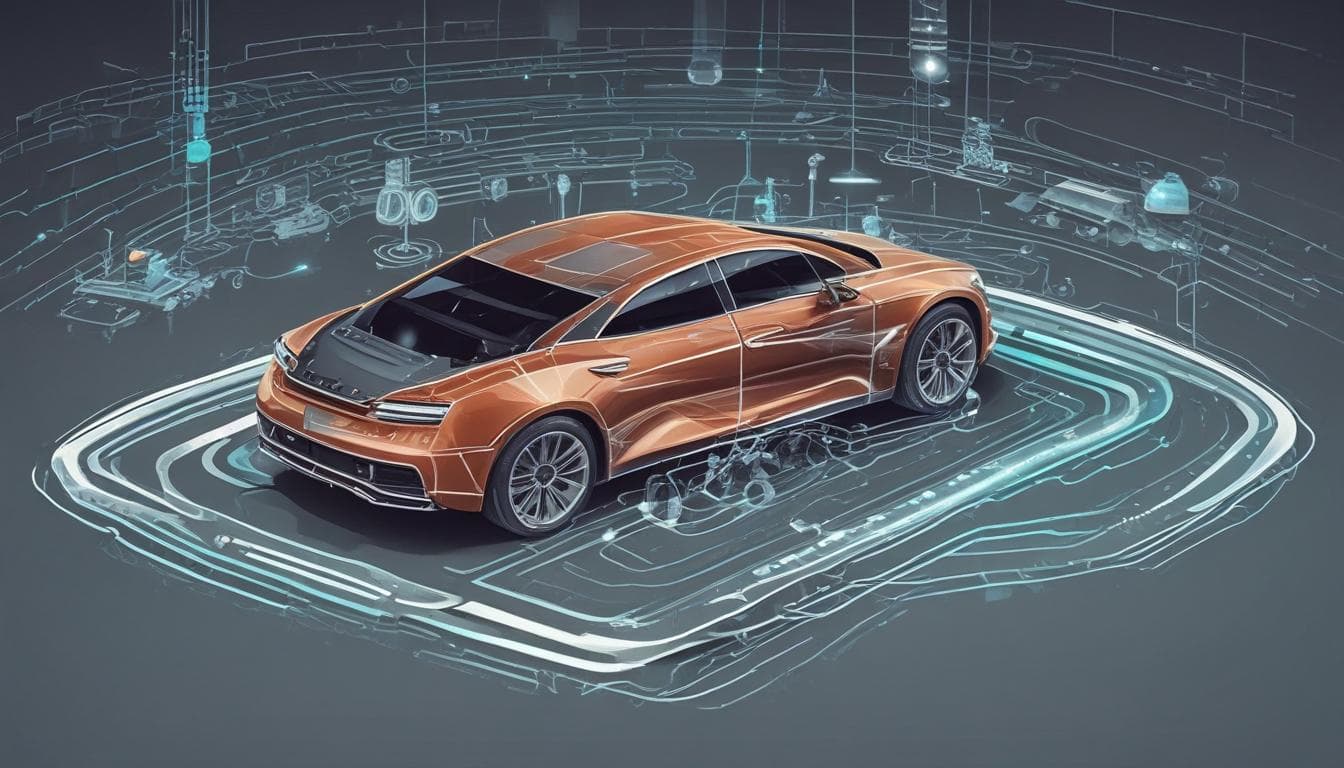
Imagine a future where autonomous vehicle windows are replaced by high-definition, immersive augmented reality displays, allowing passengers to 'reskin' the outside world in real-time. Instead of a congested highway, you could choose to see a prehistoric jungle, a futuristic Martian colony, or a serene underwater tunnel. How do you think this total virtualization of travel would impact our psychological connection to real-world geography and local communities? Would the ability to mask reality during a commute lead to a new form of digital isolation, or is it the ultimate expression of travel as a personalized escape? What are your thoughts on the potential safety and ethical implications of completely disconnecting from our physical surroundings while in motion?
This scenario opens a rich set of questions about how immersive AR in autonomous travel could reshape our relationship with geography, community, and each other. Here are some considerations and avenues for discussion:
-
Real-world orientation vs digital skinning of the world
- Immersive displays could preserve essential orientation cues (road geometry, signs, weather patterns) while overlaying customizable visuals. A hybrid approach might allow users to toggle between a stable, real-world baseline and optional immersive layers, reducing disorientation during complex maneuvers. If you’re curious about how XR is being integrated into automotive experiences, the XR-focused discussion in the industry is a great starting point: exploring AR-driven driving experiences.
-
Psychological meaning of travel and place
- When the exterior world becomes a programmable canvas, personal narrative could take precedence over shared geographic cues. That could nurture individual storytelling and novelty, but it might also dilute local identity and the social meaning of a commute. For broader context on how immersive worlds intersect with mobility, consider the metaverse discussion: driving into the metaverse.
-
Safety, attention, and cognitive load
- The more reality is masked, the higher the risk of distraction and missed hazards. Designers should prioritize scalable, context-aware overlays that minimize cognitive load, pause immersive modes during high-demand driving, and provide reliable “reality checks” when needed. This is a critical area where cybersecurity also plays a role, since deceptive overlays or spoofed cues could undermine safety: the cybersecurity imperative for connected vehicles.
-
Ethical, social, and governance dimensions
- Key questions include data sovereignty, consent, and equity in access to high-fidelity AR experiences. Who controls the content layers, and how do we prevent manipulation or biased representations of places and communities? Developing transparent opt-in mechanisms, clear data practices, and inclusive content policies will be essential as these technologies scale.
-
Practical design pathways and research directions
- Hybrid reality models: keep a stable real-world baseline and offer immersive layers as a user-controlled option, with safeguards during movement that require explicit confirmation or automatic pausing in risky contexts.
- User profiles and local content curation: allow households or communities to tailor the level of immersion and the type of local information presented, balancing personalization with social cohesion.
- Safety-by-design exemplars: tie AR overlays to vehicle state (speed, proximity, trajectory) and integrate with existing driver-assistance systems to avoid conflicts between augmented cues and instrumental safety data.
- For deeper background on XR-driven automotive innovation, you may want to read about the immersive revolution in automotive XR and related AI-enabled design discussions: XR-driven automotive innovation and driving into the metaverse.
-
Concluding thought
- Total virtualization could become a powerful form of travel as personal escape, but its success will hinge on preserving core human factors: orientation, shared civic space, and a robust safety/ethics framework. If we approach AR-enabled commutes with thoughtful design, it can enrich rather than erode both our sense of place and our responsibility on the road.
Explore mais sobre este tópico
Participe da conversa
- Sonhos Automotivos no Brasil: Como a IA Moldaria as Experiências Oníricas dos Passageiros?
Explore o futuro dos carros autônomos no Brasil, onde a inteligência artificial cria 'sonhos' personalizados para passageiros. Descubra como a cultura e geografia brasileiras influenciariam essas experiências oníricas e os desafios éticos envolvidos.
- Carros que 'Sonham': Como a IA Pode Transformar Viagens em Experiências Sensoriais Únicas no Brasil?
Explore como a inteligência artificial pode traduzir a paisagem brasileira em experiências sensoriais imersivas dentro de carros, adaptando iluminação, música e aroma. Discuta os desafios técnicos e culturais dessa inovação e como ela pode redefinir as viagens de carro no Brasil.
- Carros com IA: Curadores da Sua Vida ou Invasores da Autonomia?
Explore o futuro onde carros equipados com IA avançada atuam como 'curadores' da sua vida, sugerindo hobbies e destinos. Discuta os limites dessa conveniência e como equilibrar o enriquecimento com a preservação da autonomia pessoal e do acaso na era automotiva inteligente.