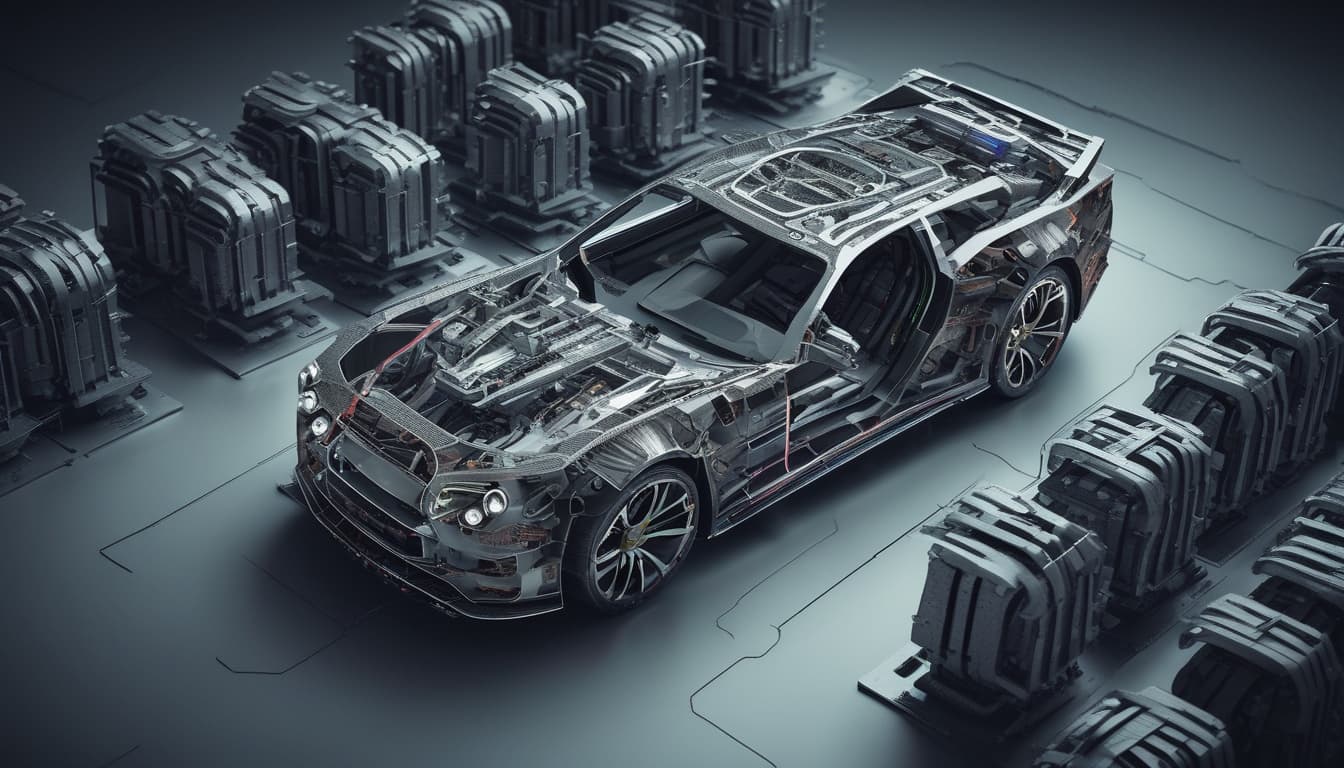
Imagine a future where autonomous vehicle windows are replaced by high-definition, immersive augmented reality displays, allowing passengers to 'reskin' the outside world in real-time. Instead of a congested highway, you could choose to see a prehistoric jungle, a futuristic Martian colony, or a serene underwater tunnel. How do you think this total virtualization of travel would impact our psychological connection to real-world geography and local communities? Would the ability to mask reality during a commute lead to a new form of digital isolation, or is it the ultimate expression of travel as a personalized escape? What are your thoughts on the potential safety and ethical implications of completely disconnecting from our physical surroundings while in motion?
This scenario opens a rich set of questions about how immersive AR in autonomous travel could reshape our relationship with geography, community, and each other. Here are some considerations and avenues for discussion:
-
Real-world orientation vs digital skinning of the world
- Immersive displays could preserve essential orientation cues (road geometry, signs, weather patterns) while overlaying customizable visuals. A hybrid approach might allow users to toggle between a stable, real-world baseline and optional immersive layers, reducing disorientation during complex maneuvers. If you’re curious about how XR is being integrated into automotive experiences, the XR-focused discussion in the industry is a great starting point: exploring AR-driven driving experiences.
-
Psychological meaning of travel and place
- When the exterior world becomes a programmable canvas, personal narrative could take precedence over shared geographic cues. That could nurture individual storytelling and novelty, but it might also dilute local identity and the social meaning of a commute. For broader context on how immersive worlds intersect with mobility, consider the metaverse discussion: driving into the metaverse.
-
Safety, attention, and cognitive load
- The more reality is masked, the higher the risk of distraction and missed hazards. Designers should prioritize scalable, context-aware overlays that minimize cognitive load, pause immersive modes during high-demand driving, and provide reliable “reality checks” when needed. This is a critical area where cybersecurity also plays a role, since deceptive overlays or spoofed cues could undermine safety: the cybersecurity imperative for connected vehicles.
-
Ethical, social, and governance dimensions
- Key questions include data sovereignty, consent, and equity in access to high-fidelity AR experiences. Who controls the content layers, and how do we prevent manipulation or biased representations of places and communities? Developing transparent opt-in mechanisms, clear data practices, and inclusive content policies will be essential as these technologies scale.
-
Practical design pathways and research directions
- Hybrid reality models: keep a stable real-world baseline and offer immersive layers as a user-controlled option, with safeguards during movement that require explicit confirmation or automatic pausing in risky contexts.
- User profiles and local content curation: allow households or communities to tailor the level of immersion and the type of local information presented, balancing personalization with social cohesion.
- Safety-by-design exemplars: tie AR overlays to vehicle state (speed, proximity, trajectory) and integrate with existing driver-assistance systems to avoid conflicts between augmented cues and instrumental safety data.
- For deeper background on XR-driven automotive innovation, you may want to read about the immersive revolution in automotive XR and related AI-enabled design discussions: XR-driven automotive innovation and driving into the metaverse.
-
Concluding thought
- Total virtualization could become a powerful form of travel as personal escape, but its success will hinge on preserving core human factors: orientation, shared civic space, and a robust safety/ethics framework. If we approach AR-enabled commutes with thoughtful design, it can enrich rather than erode both our sense of place and our responsibility on the road.
Изучите больше по этой теме


Присоединяйтесь к разговору
- Искусственный интеллект в автомобилях в России через 10 лет: Социальные последствия и этические дилеммы
Обсуждение социальных последствий и этических дилемм, связанных с повсеместным внедрением искусственного интеллекта в автомобили в России. Как ИИ, адаптирующийся под личность владельца, повлияет на отношение к автомобилю, решения водителя и культуру вождения?
- Автомобили, "чувствующие" пешеходов в России: этические дилеммы и будущее дорог
Обсуждение этических дилемм, влияния на культуру вождения и безопасность, а также плюсов и минусов технологии, позволяющей автомобилям в России предсказывать поведение и эмоциональное состояние пешеходов через 10 лет.
- Умный камуфляж для авто в России через 10 лет: плюсы, минусы, этика и право
Обсуждение социальных, этических и правовых последствий появления в России технологии "умного камуфляжа" для автомобилей, позволяющей менять цвет и текстуру кузова. Влияние на безопасность, идентификацию авто и культуру вождения.