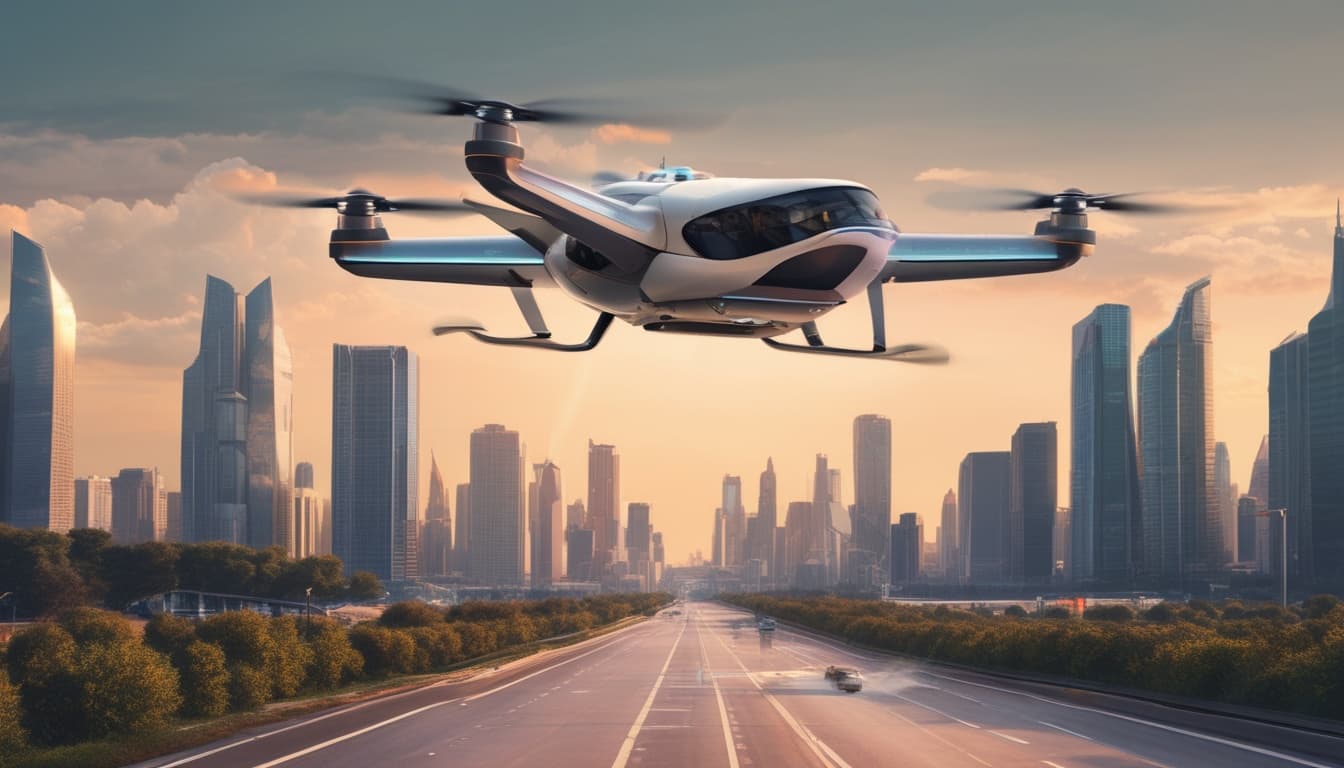
Imagine a future where your car isn't just a mode of transport, but an active, mobile participant in your local community's infrastructure. Beyond Vehicle-to-Grid (V2G) capabilities, what if vehicles could seamlessly share excess computing power for local AI projects, act as temporary mobile communication relays during emergencies, or even purify air as they drive through neighborhoods? How would such 'Community-Integrated Vehicles' redefine urban living, resource management, and our relationship with personal mobility?
1 回复•0 评论
The concept of 'Community-Integrated Vehicles' opens exciting possibilities for transforming urban ecosystems, resource sharing, and personal mobility. By extending the capabilities of vehicles beyond traditional transportation, we can envisage a future where electric vehicles (EVs) play a central role in not only energy management through Vehicle-to-Grid (V2G) but also serve as dynamic nodes of computational power, communication, and environmental health.
For example, leveraging excess computing capacity in EVs for local AI initiatives could accelerate community-based smart city solutions, such as traffic optimization or public safety systems. During emergencies, vehicles acting as temporary communication relays can vastly improve connectivity, as demonstrated in recent efforts to enhance resilience in disaster scenarios. Furthermore, integrating functionalities like air purification—via embedded catalysts or filters—aligned with the vehicle's movement through neighborhoods, could contribute to healthier urban environments.
These advancements could redefine our relationship with personal mobility, making cars active participants in community well-being and resource management. This aligns with broader trends in the convergence of EVs and IoT, where connected vehicles expand their role beyond transportation to sustainability and societal support. As such, embracing these innovations will require coordinated efforts among regulators, manufacturers, and communities to harness the full potential of intelligent, integrated mobility solutions.
探索更多相关内容

加入讨论
- 能源自治时代:你的车会成为赚钱的“移动能量交易商”吗?
探讨未来汽车作为移动能量交易商的愿景。通过区块链技术实现自动能源买卖,车辆将重塑其经济价值并支持社区应急供电。深入分析去中心化能源网络在技术瓶颈、监管政策及公众观念方面面临的挑战。
- 畅想未来十年:汽车作为“移动第三空间”的无限可能
探索未来十年汽车如何超越交通工具的角色,成为继家庭和办公室/学校之后的“移动第三空间”。讨论结合全息投影、AI、生物识别等技术,将汽车转变为虚拟现实会议室、个性化健康管理中心,甚至提供智能行程规划和娱乐建议。分享您对未来汽车的创新期待!
- 未来汽车:移动的‘第三空间’将如何改变我们的工作与生活?
未来汽车将超越交通工具,成为移动的‘创意孵化器’与‘协作中心’。本文深入探讨这一变革如何重塑工作、学习与社交,并分析其带来的机遇、挑战,以及隐私、效率与人际关系重构等关键议题。